Best Cenotes Near Chichen Itza: Ik Kil, Suytun and the Valladolid Ring, Compared
Short on time? Start here. For a proper swim right after the ruins, go to Cenote Ik Kil: it is about 3 km from the Chichen Itza entrance. For the photograph, go to Cenote Suytun: a cave cenote built around one shaft of light. For quiet, go to Cenote Yokdzonot, the community-run sinkhole most visitors never reach. And know the routing truth before you plan: apart from Ik Kil and Yokdzonot, every cenote on this page is really a Valladolid-side trip, the rest cluster around the town, roughly 40–45 km from the ruins, so "near Chichen Itza" describes a day's route, not a short walk.
The Short Answer: Which Cenote Should You Choose?
There is no single best cenote near Chichen Itza: there is a best cenote for the swim you want. Pick by traveller type:
- A proper swim → Cenote Ik Kil.
Deep, open water minutes from the ruins, with steps and platforms made for actually swimming, the classic post-ruins swim.
- The photograph → Cenote Suytun.
A cave cenote with a stone platform under a skylight; when the beam lands, it is the most photographed cenote in Yucatán. Swimming here is secondary.
- Families with kids → Ik Kil, early in the day.
Facilities, lockers and a mandatory life jacket for every swimmer, and the shallowest learning curve for a family arriving straight from the ruins.
- Quiet and local → Cenote Yokdzonot.
Run by a Maya women's cooperative, with a fraction of Ik Kil's footfall, the pick when the crowd is the thing you are avoiding.
- Big-group facilities → Cenote Saamal.
Hacienda Selva Maya is built for coaches: buffet, waterfall, space. That is why the big tours stop here: see the Saamal section for what that means for you.
- Cave atmosphere → Xkekén and Samulá.
Two enclosed cave cenotes at Dzitnup, lit through holes in the roof, the underground end of the cenote spectrum.
- Not swimming → Ik Kil from above, or Suytun.
Ik Kil's water is deep, reported at 40–50 m, with no shallow end, and a life jacket is mandatory for everyone who gets in; the non-swimmer's visit is the rim and the platforms, looking down into the water without entering it. At Suytun the swim is secondary anyway. The platform and the light come first.
- Limited mobility → read the access facts before you pick.
Ik Kil's water is reached by a carved staircase only: no step-free route to the water is documented. The accessibility guide grades the access at each venue in detail, and the family guide covers prams, carriers and small children.
- A rainy day → Ik Kil, or under a roof.
Ik Kil is open rain or shine: a wet forecast does not cancel the swim there. Hubiku, under its dome, and Suytun, inside its cavern, sit largely outside the rain question, as reported.
Cenotes Near Chichen Itza, Compared
Every distance below was route-checked in November 2026: road distances, not straight lines. Prices are printed only where a source can stand behind them, and each carries its source; where reporting conflicts, the table says so instead of inventing a figure.
| Cenote | Type | From the ruins | From Valladolid | Entry | Hours | Best for |
|---|---|---|---|---|---|---|
| Ik Kil | Open sinkhole | ~3 km / ~5 min | ~40 km | 240 MXN adult; 150 MXN child by height (official site, cenoteikkil.com) | 9:00 AM–5:00 PM, 365 days | The swim after the ruins |
| Yokdzonot | Open sinkhole | ~18–25 km | West of town | Packages vary: check locally | Daytime | Quiet, community-run |
| Suytun | Cave | ~45–53 km / ~40–45 min | ~8 km | 250 MXN advance online, adults: Suytun + Kaapeh combined ticket (official ticket store) | 9:00 AM–5:00 PM, last entry 4:00 PM | The photograph |
| Saamal | Open-air, with a waterfall | ~35–45 km | ~5–7 km, on the Chichen side | Entry reported ~150–200 MXN; buffet packages ~350–400 MXN: check current packages | Daytime | Big groups, buffet |
| Oxman | Open sinkhole | ~40 km / ~35–40 min | ~4–6 km | Packages vary: check locally | Check before going | Rope swing, hacienda pool |
| Xkekén + Samulá | Cave (two cenotes, one ticket office) | ~38 km / ~35 min | ~7 km (Dzitnup) | No settled single fee: combined and single prices conflict in reporting; check at the ticket office | 8:00 AM–5:00 PM | Cave atmosphere |
| Hubiku | Semi-open dome | About 45–60 min by road, via Valladolid | 17 km north (Temozón) | Packages vary: check locally | 9:00 AM–5:00 PM (yucatan.travel) | Ek Balam pairing, buffet |
| Chichikán | Open, with a central island | Valladolid side | Near town | ~150 MXN cenote-only vs ~300 MXN with food, as reported: check current packages | Daytime | Cultural eco-park day |
| X'Canché | Open (at Ek Balam) | At Ek Balam: a separate trip | North, toward Ek Balam | Packages vary: check locally | Daytime; check before going | Ek Balam pairing, zip lines |
| Zací | Semi-open, in town | 45 km | In Valladolid itself | 150 MXN adult / 75 MXN child: full block in the Valladolid guide | See the Valladolid guide | A swim without leaving town |
Read the map, not just the list: Ik Kil and Yokdzonot are the only cenotes genuinely close to the ruins. Everything else sits on the Valladolid side, which is why most travellers swim at one cenote near the ruins, or base a second cenote day in Valladolid itself.
Open, Semi-Open or Cave: What Each Type Feels Like
Open cenotes: Ik Kil, Yokdzonot, Oxman
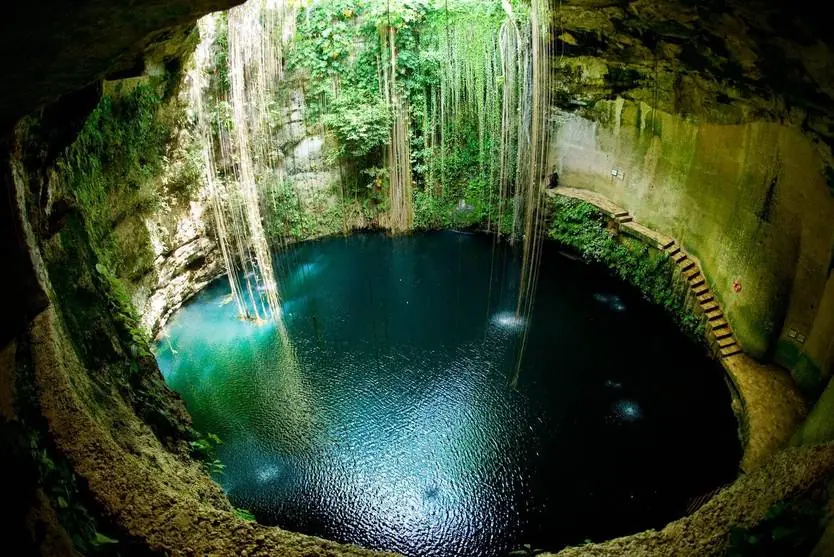
The roof has fully collapsed and the water sits open to the sky: full sunlight, the warmest feel, vines and roots hanging down the walls. These are the swimming cenotes: you float in daylight, look straight up, and the experience is closer to a natural pool in a rock amphitheatre than to a cave.
Semi-open cenotes: Hubiku, Zací
A dome with an opening in the roof: part cave, part open air. Light falls in shafts through the hole while the edges stay in shadow, so the water reads deep blue-green and the air feels cooler. Hubiku's great domed chamber is the type specimen near Chichen Itza.
Cave cenotes: Suytun, Xkekén, Samulá
The roof is intact except for a small skylight, and you descend into an enclosed cavern. The light is the event here, a single beam through the roof hole, and the water is reached by platforms and stairs rather than open banks. These are the photograph cenotes: atmospheric first, swimming second.
Choosing by feel: want to swim and float in the sun: open. Want the famous beam photograph: cave. Want something in between, with shade and spectacle both: semi-open. The temperature barely changes between types: the water is groundwater, insulated by the rock, and holds at roughly 24–26°C in all of them.
Cenote Ik Kil
~3 km from the ruins · Open sinkhole, ~60 m across · Open 9:00 AM–5:00 PM, 365 days a year
Ik Kil is the cenote the Chichen Itza day is built around: a vast open sinkhole a few minutes from the ruins entrance, ringed with hanging vines, where a carved stairway descends through the rock to platforms at water level. It is the standard swim stop on tours from Cancun, Playa del Carmen and Merida alike, and the only cenote on this page whose prices are fully settled, because they come from the cenote's own official site.
The official 2026 prices
General admission is 240 MXN, and it includes the life jacket, a locker and parking, that is the cenote's own wording for its own ticket, for visitors arriving independently. The child price is 150 MXN, and it is set by height, not age: children 1.20–1.40 m tall pay the child price, children under 1.20 m enter free, and anyone 1.40 m or taller pays the adult price. One footnote that catches families out: the child ticket does not include a locker: the adult ticket does. The buffet package at the ticket office is 530 MXN per adult and 280 MXN per child, covering general access, jacket, parking, locker, the assisted buffet and one drink. (Source: cenoteikkil.com, "Entradas y Paquetes en 2026", checked November 2026.)
The descent is not the depth
Two numbers about Ik Kil are constantly confused. The water lies about 26 metres below the rim, that is the descent, the stairway you walk down. The water itself is 40–48 metres deep. Both matter: the first tells you there are real stairs involved (allow for them, especially climbing back up wet), and the second tells you why the life jacket rule below is not negotiable: there is no shallow end and nowhere to stand.
The swim, and the rules that come with it
The water holds at about 24–26°C year-round, cool and startling for the first ten seconds, then the best feeling in Yucatán after a hot morning at the ruins. A life jacket is mandatory for every swimmer, and a rinsing shower is mandatory before you swim: the reasons are in the rules and safety section below. Swimmers enter from the platforms; non-swimmers can watch from the rim and the viewing levels, which is a spectacle in itself.
The crowds, honestly: Ik Kil is the busiest cenote near Chichen Itza at midday, because it is the standard tour stop: the same coaches that fill the ruins at 11 AM reach the water soon after. Swim early or late in its 9-to-5 day and the difference is dramatic. Is Ik Kil worth it? Yes, for the swim. It is deep, dramatic and minutes from the ruins; just do not expect it to be empty at noon, and do not go expecting the quiet of Yokdzonot.
Ik Kil on its own, the descent, the depth figures and the ticket fine print in one place, is covered in full in our complete Cenote Ik Kil guide.
Cenote Suytun
~45–53 km from the ruins · ~8 km from Valladolid · Cave cenote
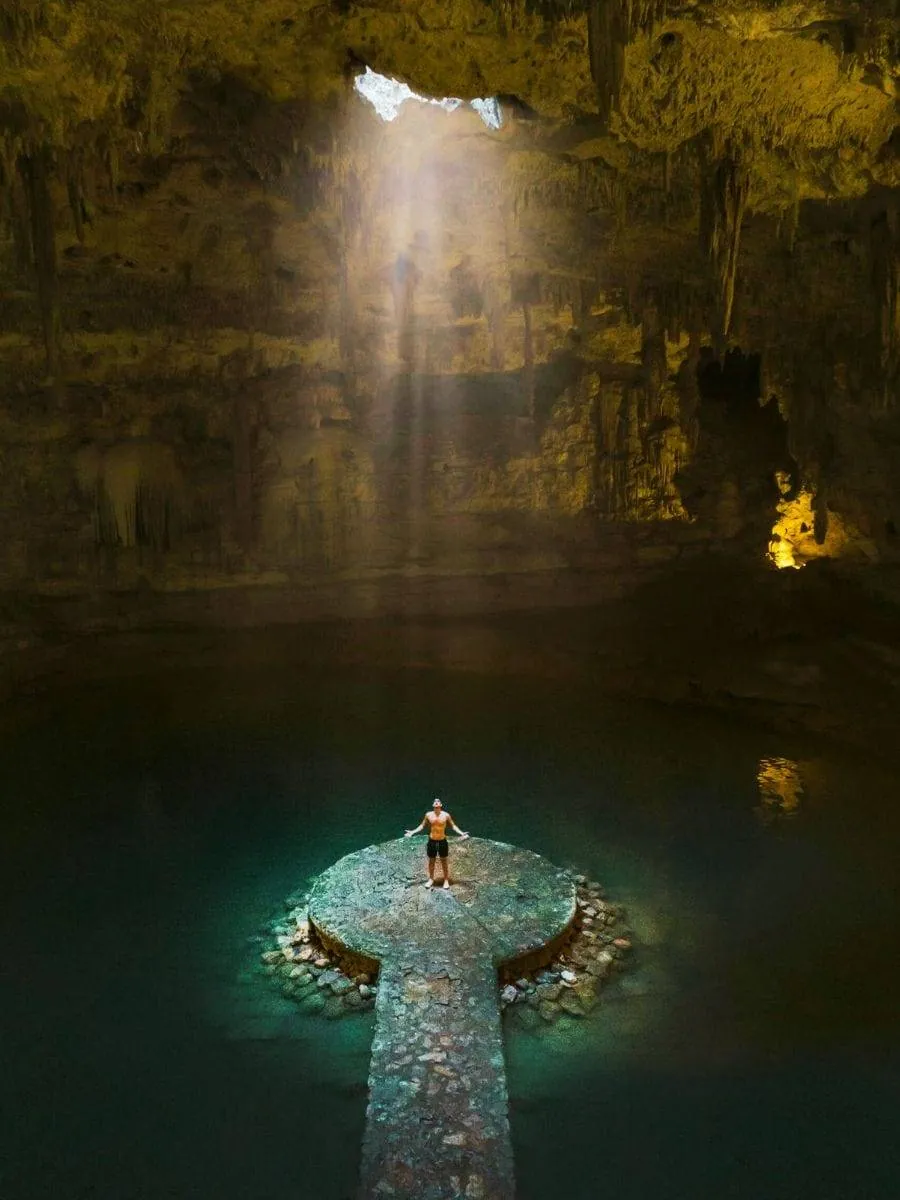
Suytun is the photograph: an enclosed cave cenote where a circular stone platform reaches into the water directly under a hole in the roof, and around the middle of the day a shaft of light falls through it onto the platform. It is the most shared cenote image in Yucatán, and it is a Valladolid-side trip, roughly 40–45 minutes from the ruins, not a quick hop.
The beam: reported across sources at roughly 11 AM–2 PM, the window shifts with the season and the sun, and no single minute is promised. Arrive inside that window and you still may not walk straight onto the platform: photo queues of 30–60 minutes at peak are reported, as each visitor takes their turn in the light.
Price and hours: the official ticket store sells advance online entry at 250 MXN for adults, a combined ticket covering Suytun and its sister cenote Kaapeh; other channels report different figures, so treat 250 MXN as the advance-online price, not a universal one. Hours are 9:00 AM–5:00 PM with last entry at 4:00 PM. The old 60-minute visit limit has reportedly been removed. Check the official site before you go. The full ticket and beam-timing breakdown is in our Cenote Suytun guide.
Ik Kil vs Suytun, settled: swim at Ik Kil, photograph at Suytun. Swimming at Suytun is limited, the platform and the beam are the visit, while Ik Kil is deep open water made for a proper swim. They are also in opposite directions from a Valladolid base, which is why the two-cenote pairings below group them the way they do.
Cenote Saamal
Hacienda Selva Maya · ~5–7 km from Valladolid, on the Chichen side · ~35–45 km from the ruins
Saamal is the group cenote: an open-air cenote with a man-made waterfall at Hacienda Selva Maya, with a buffet restaurant and facilities built at coach scale. That scale is precisely why the biggest tours stop here: a hacienda can absorb several buses of swimmers at once in a way a small community cenote cannot. Sources describe it as open and semi-open in different places; look at the water and it is open-air under the sky, with the waterfall as its signature.
Prices, as ranges only: entry is reported around 150–200 MXN, and buffet packages around 350–400 MXN in 2026 guide reporting: check the current packages before you go, because Saamal's pricing moves with its tour contracts and no single settled figure is published here.
Why this matters when you book a tour: many travellers book a "Chichen Itza and cenote" day picturing Ik Kil and swim at Saamal instead, including a widely sold budget combo whose own page names a different cenote than its swimmers get. The full story of that split is on our Chichen Itza and cenote tour page. If the cenote matters to you, ask which one your tour swims at, by name, before you pay anything.
Cenote Hubiku
Temozón, 17 km north of Valladolid · Semi-open dome · Hours 9:00 AM–5:00 PM
Hubiku is a great domed chamber of a cenote, semi-open, with light falling through the roof onto deep blue water, wrapped in a full hacienda-style complex: a buffet, a tequila museum and Maya village displays. It is the most "attraction" of the cenotes on this page, and for many visitors the extras are the point.
The distance, honestly: Hubiku sits 17 km north of Valladolid, which puts it at about 45–60 minutes from the ruins by road via Valladolid. Shorter figures circulate online; they are not road distances, and a plan built on them falls apart on the day. No single kilometre figure from the ruins is printed here for the same reason.
Price: none is printed: reported figures for Hubiku range so widely across sources that any single number would be a guess. Check the current packages locally. The pairing that works: Hubiku belongs with Ek Balam, not with a Chichen Itza morning: it is on the Ek Balam road, north of Valladolid, and travellers doing the northern ruins pair the two naturally. The two big-complex cenotes are profiled together in our Cenote Hubiku and Saamal guide.
The Valladolid Cave Cenotes: Oxman, Xkekén and Samulá
Cenote Oxman: Hacienda San Lorenzo
~4–6 km from Valladolid · ~40 km / ~35–40 min from the ruins
Oxman is an open sinkhole on a working hacienda, famous for one thing above all: the rope swing, swinging out from the rim-side platform and dropping into deep blue water. The hacienda adds a swimming pool and a restaurant, which makes Oxman the easiest cenote near Valladolid to spend half a day at: swim the cenote, then use the pool and eat without moving. No price and no hours are printed here: the figures in circulation conflict, so check both before you go.
Xkekén and Samulá: the Dzitnup pair
Dzitnup, ~7 km from Valladolid · ~38 km / ~35 min from the ruins · Hours 8:00 AM–5:00 PM
At Dzitnup, two cave cenotes share one site and one ticket office. Xkekén is the famous one, a cavern where a shaft of light through the roof hole turns the water an electric blue. Samulá, a short walk away, is its quieter sibling: a larger cave chamber with tree roots reaching down through the roof toward the water. Together they are the cave-atmosphere pick of this page, enclosed, cool and otherworldly in a way no open cenote matches.
On the fee: reporting conflicts: combined-ticket figures and separate single-cenote figures both circulate and do not agree, so no single fee is printed. Ask at the shared ticket office; the pair is usually visited together, and the earlier 8:00 AM opening makes Dzitnup the easiest second cenote to fit before a Valladolid afternoon.
Chichikán, X'Canché and Yokdzonot
Cenote Chichikán
An open cenote with a central island and waterfall, set in a cultural eco-park near Valladolid, the visit comes with the park's Maya cultural displays around the swim. The park's own packages now put the swim at 250 MXN with the life jacket and locker included, and one mid-priced package is buffet-only, with no swim at all. Every package, the park's unpublished hours and its second cenote, Noolha, are walked through in our Cenote Chichikan guide.
Cenote X'Canché
X'Canché is Ek Balam's cenote: it sits at the Ek Balam site, reached after the ruins there, with zip lines and rappelling over the water for travellers who want the active version. It pairs with Ek Balam, not with a Chichen Itza morning: treat it as the swim of a northern-ruins day. No price and no hours are printed (sources conflict). Go in daytime and check before you travel.
Cenote Yokdzonot: the quiet pick
Yokdzonot is an open sinkhole about 18–25 km from the ruins, run by Zaaz Koolen Ha, a Maya women's cooperative from the village of the same name, with a zip line, rappelling and a restaurant on site. It is the second-closest cenote to Chichen Itza and by far the quieter of the two, the swim you choose when the Ik Kil crowds are the thing you are avoiding, and the one where your entry fee stays in the community that maintains the cenote. No price and no depth figure are printed: both conflict across sources, so check the price locally.
Cenote Zací
Zací is the odd one out on this page: a semi-open cenote inside Valladolid town itself, 45 km from the ruins, a cavernous sinkhole a short walk from the main square, where you can swim without leaving the town you are sleeping in. It earns its row in the comparison because for anyone based in Valladolid it is the zero-effort swim: no drive, no pairing puzzle, just walk over.
Its settled facts, the 150 MXN adult / 75 MXN child entry, the hours, and the honest caveat that its swim access has closed for works at times, so the current swim status is worth checking before you count on it, are covered in full in our Valladolid guide, which owns Zací's block. Here it stays what it is in the comparison: the in-town option for a Valladolid base.
Can You Swim in the Sacred Cenote?
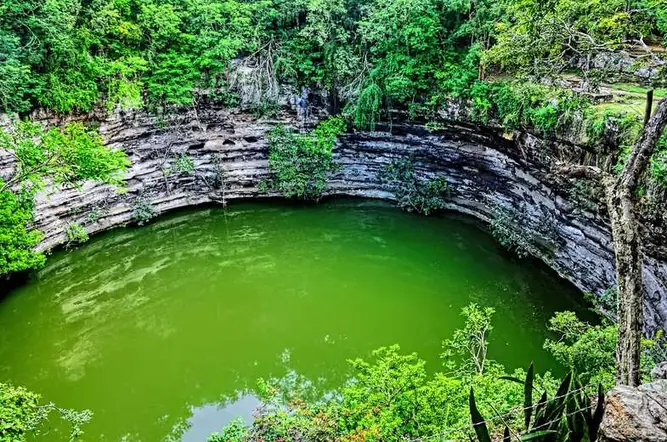
No: nobody swims in the Sacred Cenote. It is the great ceremonial well inside the ruins themselves, the sinkhole the city was named for, where offerings of gold, jade and copal were given to the water. It is viewed from the rim, and that is all: there is no entry, no platform and no swimming, for anyone, ever. The confusion is understandable, "the cenote at Chichen Itza" sounds like part of the visit, but the swimming cenote of a Chichen Itza day is Ik Kil, outside the ruins. The Sacred Cenote's own story is told in full in our Chichen Itza visitor guide.
And the cenote under the pyramid? Studies have reported a hidden cenote beneath El Castillo itself, a sealed cavity in the limestone under the pyramid. Reported is the right word, and the practical answer is simple either way: it is not accessible and cannot be visited. The cenotes you can swim in are the ones in the comparison table above ground.
For the Sacred Cenote itself, the offerings given to its water and what you actually see from the rim, see our guide to the Sacred Cenote of Chichen Itza.
How Cenotes Form
A cenote starts with rain. Rainwater picks up carbon dioxide from the air and soil and becomes a weak carbonic acid; the Yucatán is a slab of limestone, and that weak acid, given thousands of years, dissolves the rock, the karst process. Underground voids grow as the limestone dissolves, the water table fills them, and where a roof finally collapses, the groundwater is exposed to the sky: a cenote. The Maya word for it is ts'onot, and to the Maya these wells were both water source and sacred place, in a land with almost no surface rivers, they were life itself.
The water is groundwater from the Yucatán aquifer, and that explains its character: filtered through limestone, famously clear, and held at a near-constant 24–26°C because the rock insulates it from the air temperature swings above. The region's cenotes number in the thousands, and many of them trace a great arc across the peninsula, the ring of cenotes linked to the edge of the Chicxulub impact crater, where the asteroid that ended the dinosaurs fractured the limestone and set the pattern the water later followed.
Every cenote on this page exists because of one event: the crater ring these cenotes sit on explains the impact geology, and why Chichen Itza and Ik Kil sit outside the ring itself.
Cenote Rules and Safety
The shower is not a formality. At Ik Kil a rinsing shower before swimming is mandatory, and the same rule applies across the visited cenotes. The reason is the aquifer itself: cenote water is the region's drinking water, moving through highly permeable limestone, and whatever is on your skin, sunscreen, repellent, oils, travels through it and harms the cave life that lives in the dark water. The rinse protects the water everyone downstream drinks.
Sunscreen: no regular sunscreen, repellent or lotion goes in the water. Many cenotes also ban biodegradable and mineral products, and each cenote's own rule governs at its gate, so apply sunscreen for the ruins, rinse it off before the swim, and reapply after. Life jackets: mandatory at Ik Kil for every swimmer, and common across the visited cenotes; at Ik Kil the jacket is included in the cenote's own admission ticket. That inclusion is confirmed only for Ik Kil's own ticket: nowhere else on this page is a jacket's inclusion claimed.
Kids and non-swimmers: cenotes have deep water and, at open cenotes like Ik Kil, no shallow end: weak swimmers and children stay in jackets, children are supervised in the water at all times, and nobody dives head-first where the depth is unverified. Non-swimmers are not left out: the rim, the viewing platforms and the descent are a spectacle in themselves at Ik Kil and Suytun alike.
Are they safe? Cenotes are generally considered safe to swim in when the rules are followed: shower first, jacket on, no head-first diving, children supervised. Two questions come up often enough to answer plainly. The water is inland groundwater in limestone sinkholes, not a lagoon or an estuary: the crocodile stories belong to coastal lagoons, not to these wells. And the amoeba question: the risk travellers worry about belongs to warm, stagnant surface water; cenote water is cool, flowing groundwater, which is a different environment. Follow the local rules, and the swim is the safest-feeling part of a Chichen Itza day.
Why do cenotes close at 5 PM? Because there is no artificial light underground and staffing is daytime: a cave cenote in the dark is a genuine hazard, and the swim day is built around daylight. Plan any cenote as a daytime visit and the closing hour never catches you.
Visiting Two Cenotes in a Day
Yes, if you pair by geography instead of by fame. The pairings that actually work follow the clusters in the comparison table:
- Near the ruins: Ik Kil + Yokdzonot. The two genuinely close cenotes, the classic swim and the quiet community swim in one route, without crossing to Valladolid.
- On the Valladolid side: Suytun + Oxman. The photograph in the late-morning light window, then the rope swing and the hacienda pool, both within a few kilometres of town.
- The built-in pair: Xkekén + Samulá. Two cave cenotes, one site, one ticket office at Dzitnup, the easiest "two cenotes" of all, with no driving between them.
The pairing that does not work comfortably is the famous one: Ik Kil and Suytun sit on opposite sides of a Chichen Itza day, roughly 40–45 km apart via the ruins–Valladolid road, and Suytun's beam window pulls you there at midday while Ik Kil is best early or late. People do force both into a day, but it is a driving day with two swims attached, not a relaxed one. Pick the cluster that matches your base, and let the second cenote be the one that's actually near it.
Which Cenote Is on a Tour?
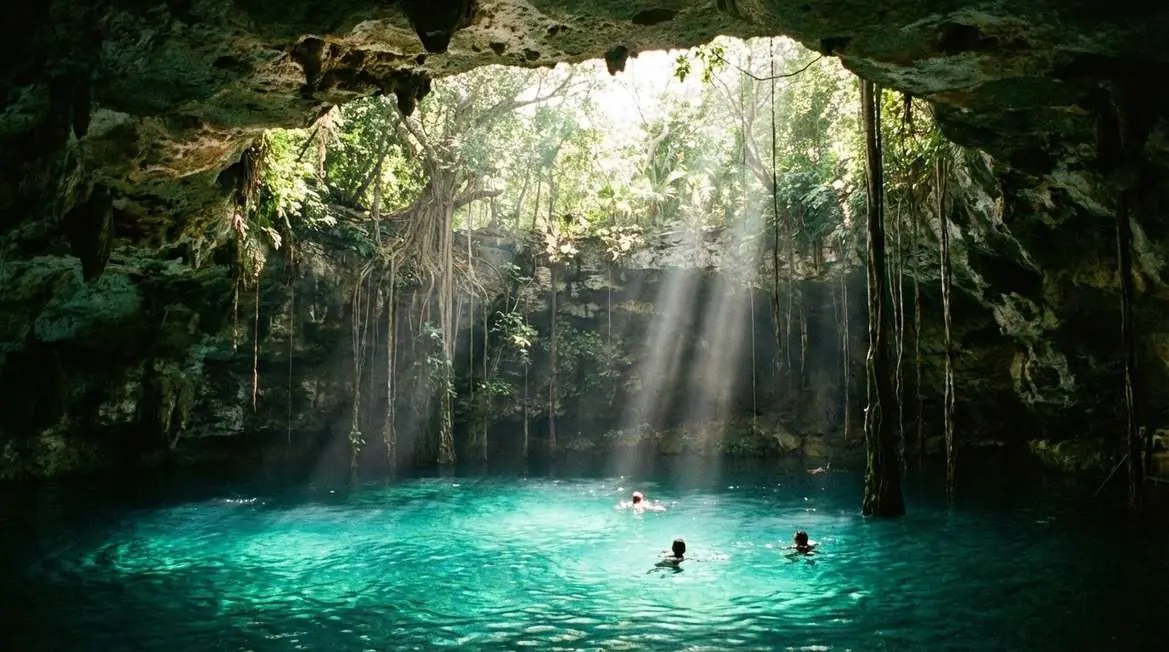
On a shared tour, the cenote is fixed by the departure: a shared route cannot swap cenotes per passenger, and any page implying you can substitute Suytun or Oxman onto a shared Chichen Itza tour is selling you something that does not exist. Know, too, that the big-coach tours favour the cenotes that fit coaches: Saamal and Hubiku absorb buses; Oxman and Yokdzonot are not built for them.
Our shared tour swims at Cenote Ik Kil, the closest cenote to the ruins, and the swim this page ranks first for exactly that job. The day runs Chichen Itza + Cenote Ik Kil + Valladolid, and the swim timing and how Ik Kil's admission is handled inside your tour price are confirmed on WhatsApp when you book.
- $130 per adult, $115 per child (children up to age 12)
- The 697 MXN Chichen Itza entrance fee is included in that price
- Pickup from your own hotel or point: the exact pickup time is confirmed on WhatsApp the night before
- 30% advance to reserve, balance on the day of the tour
- Free cancellation up to 48 hours before the tour, with the advance refunded in full
Price your day
Shared tour: Chichen Itza + Cenote Ik Kil + Valladolid. Entrance fee included.
Cenote Questions, Answered
Which is the best cenote near Chichen Itza?
It depends on the swim you want: Ik Kil for a proper swim minutes from the ruins, Suytun for the photograph, Yokdzonot for quiet, Saamal for big-group facilities, and Xkekén and Samulá for cave atmosphere. There is no single best for everyone: there is a best for each traveller type.
What is the closest cenote to Chichen Itza?
Cenote Ik Kil: about 3 km, roughly 5 minutes, from the ruins entrance. It is the only swimming cenote in the ruins' immediate area; the next closest is Yokdzonot, about 18–25 km away.
How much does Cenote Ik Kil cost?
General admission is 240 MXN, including the life jacket, a locker and parking. The child price is 150 MXN, set by height: children 1.20–1.40 m pay the child price, under 1.20 m is free, and 1.40 m and taller pay the adult price. The child ticket does not include a locker. The buffet package is 530 MXN per adult and 280 MXN per child.
Can you swim in the Sacred Cenote?
No. The Sacred Cenote inside the ruins is a ceremonial site and is viewing only: nobody swims in it. The swimming cenote on a Chichen Itza day is Ik Kil, about 3 km from the ruins.
Is Ik Kil worth it?
Yes, for the swim. It is deep, dramatic open water minutes from the ruins, with a mandatory life jacket and full facilities. Just go early or late in its 9 AM–5 PM day: at midday it is the busiest cenote near Chichen Itza, because it is the standard tour stop.
What time is the light beam at Cenote Suytun?
Roughly 11 AM–2 PM, depending on the season and the sun, sources report windows inside that range, and no single minute is promised. Expect photo queues of 30–60 minutes at peak for your turn on the platform.
Do you have to wear a life jacket in a cenote?
At Ik Kil, yes: a life jacket is mandatory for every swimmer, and jackets are common across the visited cenotes. Cenote water is deep with no shallow end, so the jacket is the rule, not a suggestion.
Can you wear sunscreen in a cenote?
Not in the water. No regular sunscreen, repellent or lotion goes into a cenote, many cenotes also ban biodegradable and mineral products, and each cenote's own rule governs. A rinsing shower before swimming is mandatory: apply sunscreen for the ruins, rinse before the swim, reapply after.
Are cenotes safe to swim in?
Yes, generally, cenotes are considered safe to swim in when the rules are followed: shower first, wear the life jacket, no head-first diving where the depth is unverified, and supervise children. The water is cool, clear groundwater, not a lagoon.
How deep is Cenote Ik Kil?
The water is 40–48 metres deep. Do not confuse that with the descent: the water surface lies about 26 metres below the rim, which is the stairway you walk down to reach it.
What is the water temperature in a cenote?
About 24–26°C, all year. Cenote water is groundwater insulated by the limestone around it, so it barely changes with the seasons, cool and refreshing after the heat of the ruins.
Can you visit two cenotes in one day?
Yes, if you pair by geography: Ik Kil with Yokdzonot near the ruins, Suytun with Oxman on the Valladolid side, or Xkekén with Samulá, which share one site at Dzitnup. Ik Kil and Suytun together make a driving day: they sit on opposite sides of the route.
Which cenote is included in a Chichen Itza tour?
It depends on the operator: big-coach tours often swim at Saamal or Hubiku, whatever the listing implies. On our shared tour the cenote is Cenote Ik Kil, fixed on the departure; the price is $130 per adult and $115 per child, with the 697 MXN ruins entrance fee included.
What is a cenote?
A cenote is a natural sinkhole where the limestone surface has collapsed to expose the groundwater below. Rainwater made slightly acidic dissolves the limestone over thousands of years until a roof gives way. The Maya word is ts'onot, and the Yucatán has thousands of them.
Is there a cenote under the pyramid at Chichen Itza?
Studies have reported a hidden cenote beneath El Castillo, a sealed cavity in the limestone under the pyramid. It is not accessible and cannot be visited; the cenotes you can swim in are above ground, like Ik Kil.
Book the Tour on WhatsApp
Booking opens on WhatsApp: send your date, your pickup city and how many adults and children, and we confirm your pickup time and the Ik Kil swim details in the chat, including how the cenote admission is handled in your price. The 30% advance reserves your seats; the balance is paid on the day of the tour.
Chat on WhatsApp- Chichen Itza + Cenote Ik Kil + Valladolid in one day
- $130 per adult · $115 per child (up to 12)
- 697 MXN entrance fee included
- Pickup from your hotel or point, confirmed the night before
- Free cancellation up to 48 hours before the tour