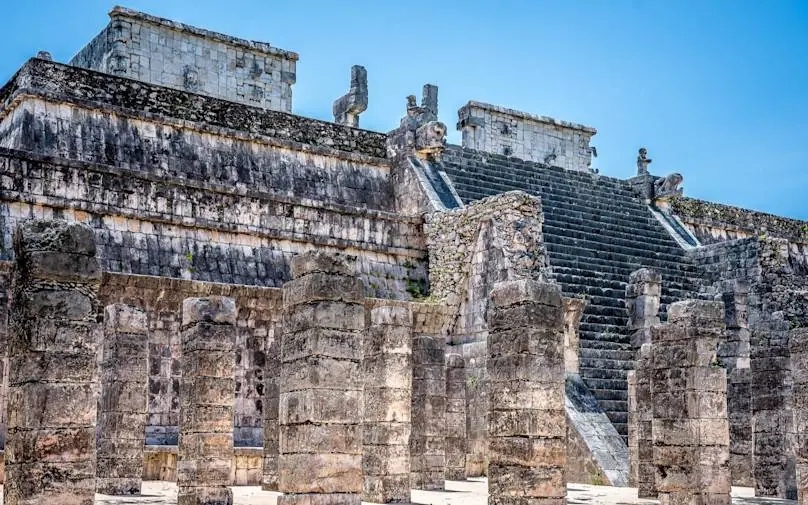
Early access means one honest thing: entering at the 8:00 AM opening, before the tour buses, not before opening, and not a sunrise inside the ruins. This page shows you the whole clock, then the tour that runs on it.
Opens 8:00 AM · Quiet 8:00–10:00 · Buses from ~9:30 · Peak to ~2:00 PM · This tour $130, entrance fee included
The verdict first: "early access" at Chichen Itza is real, and it is worth having, but it means arriving for the 8:00 AM opening and walking in ahead of the tour-bus wave, in the coolest, quietest two hours of the day. It does not mean entering before the site opens, because no standard tour can do that, whatever its name says. In Spanish the same product is sold as acceso temprano or a tour temprano, the promise is identical, and so is the gate.
This page is the clock page for the whole site: the crowd clock hour by hour, the heat clock degree by degree, the published pickup times city by city, and the days and months when the site breathes easiest. Then, at the end, the tour we run on that clock, a shared day at $130 per adult with the 697 MXN entrance fee included, a swim at Cenote Ik Kil and Valladolid still in the day.
One definition, one correction, and one honest expectation: everything else on this page follows from these three.
Early access = entering Chichen Itza at the 8:00 AM opening, in the quiet window before the tour buses arrive, and walking the ruins in the coolest hours of the day. That is the whole product. Nothing about it involves entering before the gate opens.
The same product is sold under a shelf of names: early access tour, early morning tour, first access tour, early bird tour, sunrise tour. The names differ; the gate does not.
The sunrise correction. Sunrise at Chichen Itza falls around 6:00–7:00 AM, while the site is closed. Tours with "sunrise" in the name are early-arrival products wearing a prettier label: one leading operator states it outright on its own page: "It's not possible to enter Chichen Itza before 8:00 am", and its own sunrise tour arrives around 8:30–9:30 AM. If a listing promises you sunrise among the ruins, it is promising a thing the gate does not allow.
The honest expectation. You will not have the site to yourself. Other early tours work to the same clock, and reviewers of the big early-access products report arriving at opening to find other groups already there. The win is not an empty site: it is the two quiet hours before the bus wave lands, the short ticket line, and stone you can still walk around without the midday press. That win is real, and it is enough.
The question behind every "sunrise entry" listing, answered the way we would want it answered for us.
Stories circulate, a hotel next to the site, a special arrangement, an outside-hours fee, that suggest someone, somewhere, can be inside before 8:00 AM. Those stories were not verified in the research behind this page, and they are not something a normal tour can sell you. We will not print "it exists, book it", and we will not print the opposite absolute either. What we can state plainly: this tour does not claim pre-opening entry: it sells arriving for the opening, before the buses.
Position checked November 2026 against operator pages and both major AI assistants, which disagree with each other on the special-arrangement stories, one more reason no tour should be selling them as fact.
Chichen Itza runs on a rhythm you can set your watch by. This is the typical day, hour by hour, the pattern every early start is built to beat.
The site opens and the first visitors walk in. Ticket lines at opening are a matter of minutes. El Castillo stands in soft light, the plaza is open ground, and the day's heat has not started.
Roughly two hours when the ruins belong to the early arrivals, independent travellers who drove themselves in, and the early tours. This is the window an early access tour is actually buying you.
The big tour buses start rolling in from Cancun and the Riviera Maya. Standard tours that left the coast at 7:00–8:30 AM begin arriving, and the paths around El Castillo start to fill.
By now most of the day's tour groups are inside. Ticket lines at peak can run far longer than the few minutes they took at opening, and the famous viewpoints carry a crowd.
The busiest stretch of the day, and the hottest. On peak days the site sees around 5,000 visitors. If your tour arrives in this window, this is the Chichen Itza you get.
The day tours leave for their cenotes and the road home, and the site thins out again. This late window suits travellers driving themselves, it is not one a shared tour day can use, which is why tours compete for the morning instead.
The pattern is typical, not guaranteed, weather, holidays and cruise schedules move it. But the shape holds on ordinary days, and it is why "what time does your tour arrive?" is the single most useful question you can ask any operator, including us.
Crowds are only half the argument. The other half is temperature, and at Chichen Itza the two peak together, at exactly the hours a standard tour arrives.
Between 8:00 and 11:00 AM, expect roughly 22–27 °C, warm, workable walking weather. By midday in the hot season the same ground sits at 35–38 °C, and the archaeological zone offers very little shade: the main plaza is open limestone and grass, and the sun is directly overhead in a way visitors from further north consistently underestimate.
That is why the early start pulls two kinds of traveller hardest. Photographers get low, angled light on the stonework instead of flat midday glare. Heat-sensitive travellers, older visitors, young children, anyone who wilts at noon, get the ruins at the only hours when the walk is genuinely comfortable.
An early arrival does not make the rest of the day cold, of course. It puts the walking first and the swimming second, on this tour, the Ik Kil swim lands right when the heat does.
Typical ranges for the site, checked November 2026. Any single day can sit outside them, but the morning is cooler than midday on effectively every day of the year.
An 8:00 AM gate means a dark alarm clock on the coast. These are the pickup windows the market's published early products work to, labelled as market context, because every operator sets its own route.
| Departure city | Early-product pickups (market) | Why that early |
|---|---|---|
| Cancun | ~4:30–5:30 AM | The longest drive of the five, early products leave before dawn to stand at the gate near opening. |
| Playa del Carmen | ~5:00–5:30 AM | Closer than Cancun, still a pre-dawn start for an opening arrival. |
| Tulum | ~4:45–5:15 AM | The road runs inland via Valladolid; published early products leave in the same dark window. |
| Riviera Maya | ~4:45–5:15 AM | Corridor resorts sit between Playa and Tulum, and their early pickups sit in the same range. |
| Merida | ~6:00–6:30 AM | Only about an hour and a half from the ruins, early products arrive around 7:30–8:00, and nobody's alarm is brutal. |
Now the comparison that sells the early start. Standard tours leave Cancun between 7:00 and 8:30 AM, reach the ruins around 10:00–11:00, straight into the peak, and return around 6:00–8:00 PM. The early products trade sleep for the quiet window; the standard products trade the ruins' best hours for a lie-in. Per-city detail lives on the Cancun and Merida pages.
This tour starts early from your own hotel or pickup point, and we deliberately print no clock time for it here. Pickup times depend on your city, your hotel's position on the route and the day's group, so a printed time would be a guess dressed as a promise. Instead: your exact pickup time is confirmed on WhatsApp the night before, in writing, by the people running your day.
The hour matters most, but the calendar helps too. Sources differ on any single "quietest day", so we publish the pattern, not a crowned winner.
Tuesday to Thursday is typically the least crowded part of the week. If your holiday dates are flexible, aim the ruins day at the middle of the week and let the weekend take the beach.
Entry is free for Mexican citizens and residents on Sundays, and local families quite rightly use it, Sundays are the fullest day of the week, and Saturdays run busy behind them. An early start helps on a Sunday; it cannot empty it.
The year's softest crowds fall in September and October. The busiest stretches run the other way: December to April, Holy Week, and the equinox days, when the site fills to its peak-day numbers.
Twice a year, around the equinoxes, the afternoon light draws the famous serpent shadow down the staircase of El Castillo. Note the word: afternoon. The effect appears roughly between 3:00 and 5:00 PM, an early access tour, gone by then, does not show it to you unless you stay at the site all day.
And equinox days are the busiest of the entire year, drawing crowds far beyond an ordinary peak day. Going early on an equinox still beats arriving at noon, but nobody should sell you an equinox morning as a quiet one.
If the light-and-shadow side of Chichen Itza is what draws you, the site's genuine after-hours product is Kukulkan Nights, the evening show on Wednesday to Sunday evenings, its prices live on the tickets and fees page, where all the site's hours and prices are kept in one place.
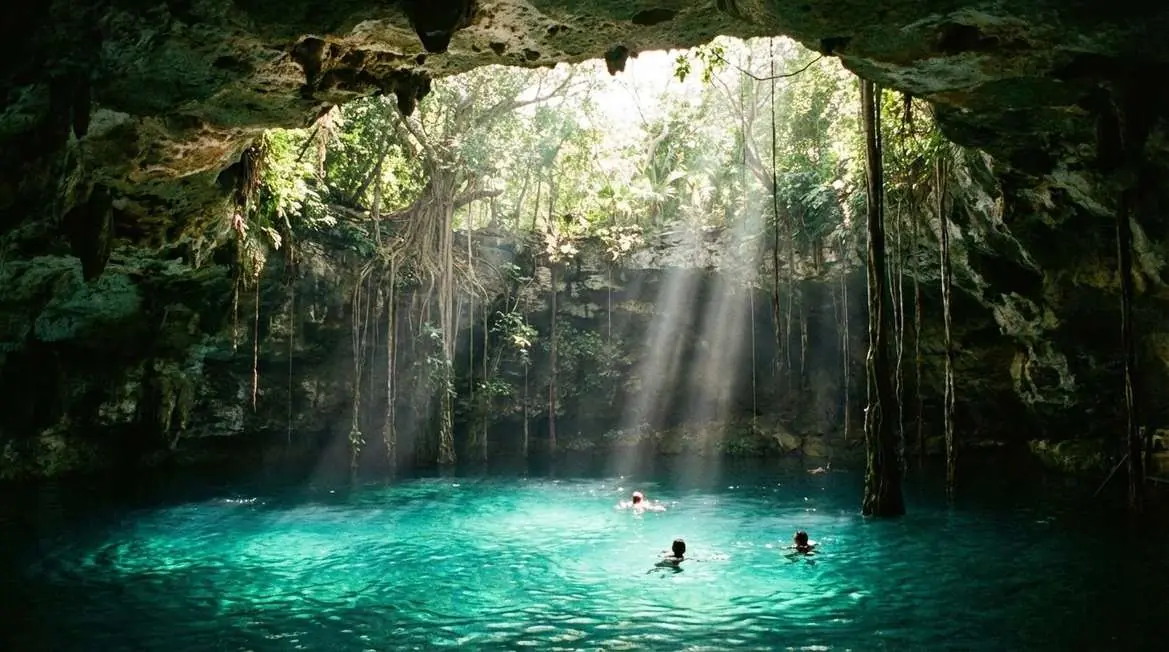
Here is the trade-off nobody puts on the early-access sales pages: most early products buy the quiet morning by cutting the rest of the day. Both shapes are legitimate, choose with your eyes open.
| Product | Headline price | What the day actually holds |
|---|---|---|
| Amigo Tours early access | From $33 | Ruins early, then done. Admission is excluded from the headline, and there is no cenote and little or no Valladolid in the day. |
| Maya Explorer sunrise tour | $150 | An honest page, it states plainly that entry before 8:00 AM is impossible, and its tour arrives 8:30–9:30. Still no cenote in the day. |
| Early products that add a cenote | Varies | Travellers report the cenote stop squeezed to 15–20 minutes on some early products, a dip, not a swim. |
| This tour The Chichen Itza Tour: early start, full day |
$130 | The ruins at opening, then a real swim at Cenote Ik Kil and Valladolid, with the 697 MXN entrance fee already included in the $130. |
Market prices are the operators' published headlines, checked November 2026, and they change, the shape of each day is the durable part. If all you want is the ruins, quiet and cool, an early-only product is a fair buy. If you want the cenote and the town as well, that is exactly the day the combo tour is built around, compare the totals on the best tours page.
For most first-time visitors, yes. You are buying the only two hours when the site is both quiet and cool, short ticket lines instead of peak queues, and photographs in angled light. First-timers, photographers and anyone who struggles in heat get the clearest return on the alarm clock.
And it is honestly skippable for some. If a 4:30 AM alarm would poison the whole day, the ruins at 10:30 are still the ruins, crowded and hot, but extraordinary. Independent travellers driving themselves have the late-afternoon window as a real alternative. Nobody should be guilted into a dawn start.
The Merida exception: from Merida, roughly an hour and a half away, an early start means a civilised morning rather than a brutal one, you can reach the opening without the 4:30 alarm. If you are based in Merida, early access is close to a free win. Travellers weighing a private early departure get the same gate, on their own group's timing.
One shared tour, run on the early clock, at one published price. The calculator at the top of this page works out your exact total, here it is in a table.
| Who | Price |
|---|---|
| Adult | $130 |
| Child (up to 12) | $115 |
| 2 adults | $260 |
| 2 adults + 1 child | $375 |
| 2 adults + 2 children | $490 |
The 697 MXN Chichen Itza entrance fee is included, nothing to pay at the gate on the day. The day itself: hotel pickup from your city, the ruins in the morning window, a swim at Cenote Ik Kil, and Valladolid on the road back.
Booking terms: 30% in advance reserves your seats, on a $260 booking for two adults that is $78 to reserve, $182 on the day. Free cancellation up to 48 hours before the tour, with the advance refunded in full; inside 48 hours, the advance is kept.
The full fee breakdown lives on the tickets & fees page
Price and terms as published November 2026 · Your exact pickup time is confirmed on WhatsApp the night before
Why an advance at all? Because customers who book and then never show up block seats that people who are ready to go could have taken. The 30% keeps the seats for the people who will actually be there, and the 48-hour free cancellation keeps it fair in the other direction.
It means entering at the 8:00 AM opening, in the quiet window before the tour buses arrive, roughly the first two hours of the day. It does not mean entering before the site opens. Every tour, however it is marketed, works within the same public opening time.
No standard tour product enters before the 8:00 AM opening. Stories circulate about special arrangements that might put someone inside earlier, but none of them is something a normal tour can sell you, and this tour does not claim it. What an early tour sells is arriving for the opening, before the buses.
No. Sunrise at Chichen Itza is around 6:00–7:00 AM, when the site is closed. Tours with "sunrise" in the name are early-arrival products: one leading operator states on its own page that it is not possible to enter before 8:00 AM, and its sunrise tour arrives around 8:30–9:30 AM. The name describes the early start, not sunrise among the ruins.
Published early-access products pick up in Cancun around 4:30–5:30 AM to reach the gate around the 8:00 AM opening. Standard tours leave Cancun between 7:00 and 8:30 AM, arrive at the ruins around 10:00–11:00 AM and return around 6:00–8:00 PM. On this tour, your exact pickup time is confirmed on WhatsApp the night before.
Published early products pick up around 5:00–5:30 AM in Playa del Carmen, 4:45–5:15 AM in Tulum and the Riviera Maya, and 6:00–6:30 AM in Merida, Merida is only about an hour and a half away, so its early start is the gentlest of the five cities. On this tour, pickup is from your hotel or point in any of the five cities, with the exact time confirmed on WhatsApp the night before.
The site is quiet from the 8:00 AM opening to about 10:00. The big tour buses start arriving around 9:30–10:00, the major wave lands by about 10:30–11:00, and the peak runs to roughly 2:00 PM. Peak days see around 5,000 visitors. The site thins again after about 3:00 PM.
The first two hours after the 8:00 AM opening, roughly 8:00 to 10:00, before the bus wave builds. There is a second, shorter quiet window in the late afternoon as the day tours leave, which suits independent travellers driving themselves; tour days are built around the morning window.
The middle of the week, Tuesday to Thursday, is typically the quietest stretch. Sunday is the busiest day, because entry is free for Mexican citizens and residents, and Saturdays run busy too. No single day is reliably empty, which is why the hour you arrive matters as much as the day you pick.
For most first-time visitors, yes: you get the ruins in the coolest, quietest two hours of the day, with short ticket lines instead of peak queues. If a very early alarm would spoil the holiday, the trade is real, from Merida the start is gentler, and independent travellers can use the late-afternoon window instead.
Between 8:00 and 11:00 AM it is typically around 22–27 °C. By midday in the hot season it climbs to around 35–38 °C, and the ruins have little shade. That gap, roughly ten degrees, is the practical reason the early start exists.
Most named early products do not, the leading early-access and sunrise tours skip the cenote and Valladolid to protect the early arrival, and early products that squeeze a cenote in can give it as little as 15–20 minutes. This tour includes both: the ruins at opening, then a swim at Cenote Ik Kil and time in Valladolid.
No. The Kukulcán serpent shadow on El Castillo is an afternoon phenomenon, appearing roughly between 3:00 and 5:00 PM around the equinoxes. An early start does not show it unless you stay all day, and equinox days are the busiest of the year. The site's after-hours option is Kukulkan Nights, on Wednesday to Sunday evenings.
8:00 AM, every day, per INAH. That single fact is what every early-access claim has to fit inside: no tour enters before it, and the whole value of an early start is being at the gate when it opens.
Aim to be at the gate a little before the 8:00 AM opening. At opening, ticket lines are a matter of minutes; at peak they can run far longer. Arriving for opening buys you the same quiet 8:00–10:00 window the early tours are built around, the full self-drive picture is on the how-to-get-there page.
The gate is the same: both enter at the 8:00 AM opening, and neither enters before it. What changes is the vehicle and the pace: a private departure runs on your group's timing alone, while a shared tour runs a set route with other travellers at a lower per-person price. Private departures are quoted on WhatsApp by group size and date.
Strip the marketing away and the early question is simple: the site opens at 8:00, stays quiet until about 10:00, and heats up with the crowd. Any tour that gets you there for the opening gives you the best two hours of the day. This one keeps the rest of the day too, Ik Kil and Valladolid, at one price with the fee inside.
Going from a specific city? The Cancun page carries that drive in full. Or message us a date on WhatsApp and start there.
We reply on WhatsApp with your exact total, the entrance fee already included, and the night before your tour, your exact pickup time lands in the same chat.
30% reserves your seats. The rest on the day.
You can message the team on WhatsApp at +1 970 780 8327. This button opens a chat with the people who run the tour: send your date and your city, and you get your exact total back before you pay anything.
Message us on WhatsAppAdults $130 · Children (to 12) $115 · 2 adults $260