Chichen Itza Accessibility: Visiting with a Wheelchair or Limited Mobility
The honest answer to "can I do Chichen Itza in a wheelchair?" is partly. The main plaza at ground level is manageable for many wheelchair users; the pyramids' summits and interiors are closed to everyone; and the swim at Cenote Ik Kil is reached by a stone staircase of about 90 steps. Meanwhile INAH, the authority that runs the site, lists "Accessibility" among the zone's services, and nowhere specifies what that means. This page separates the three kinds of statement you will meet everywhere else mixed together: what is documented, what travellers report, and what nobody has confirmed.
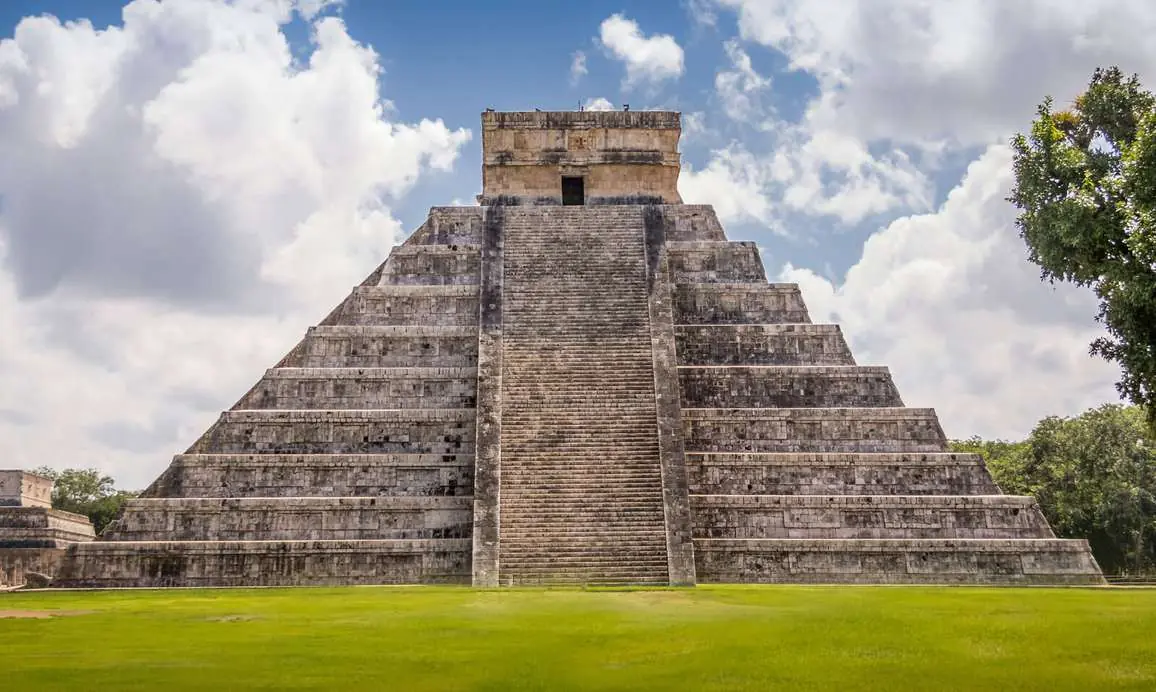
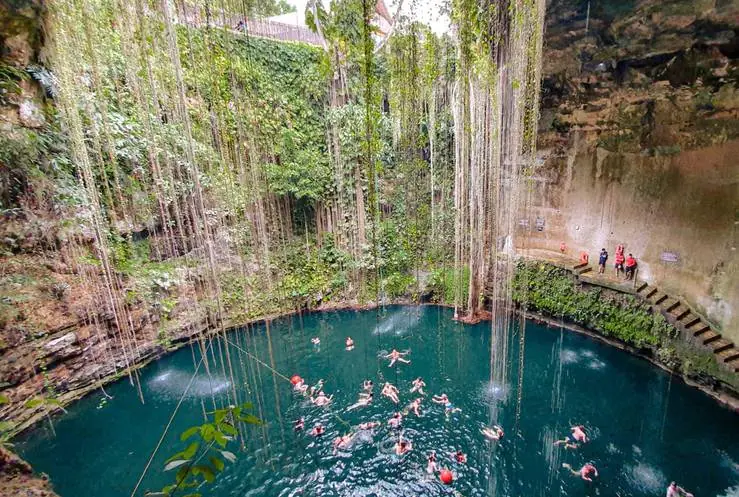
Quick answers: Chichen Itza is partially accessible: ground-level visiting in the main plaza area is manageable for many wheelchair users, and no stronger claim in either direction is honest. No step-free access to Ik Kil's water is documented. The disability exemption in Mexican federal law covers the federal fee only, not the whole 697 MXN ticket. And our tour vehicle's accessibility is not confirmed, ask the questions in this guide on WhatsApp, and get the answers in writing, before you book.
One disclosure, up front: we are a new operator with a short record. Everything on this page carries its grade in words, Officially listed Reported by travellers Not documented, so you can weigh each claim the way we had to.
The Short Answer
Here is the whole guide in one table. Every row is argued, with its sources and its grade, in the sections that follow, nothing in this table is stronger than the evidence under it.
| Part of the visit | The honest position | Grade |
|---|---|---|
| Main plaza and El Castillo's base | Manageable at ground level for many wheelchair users: flat, open ground with room to circle the pyramid | Reported by travellers |
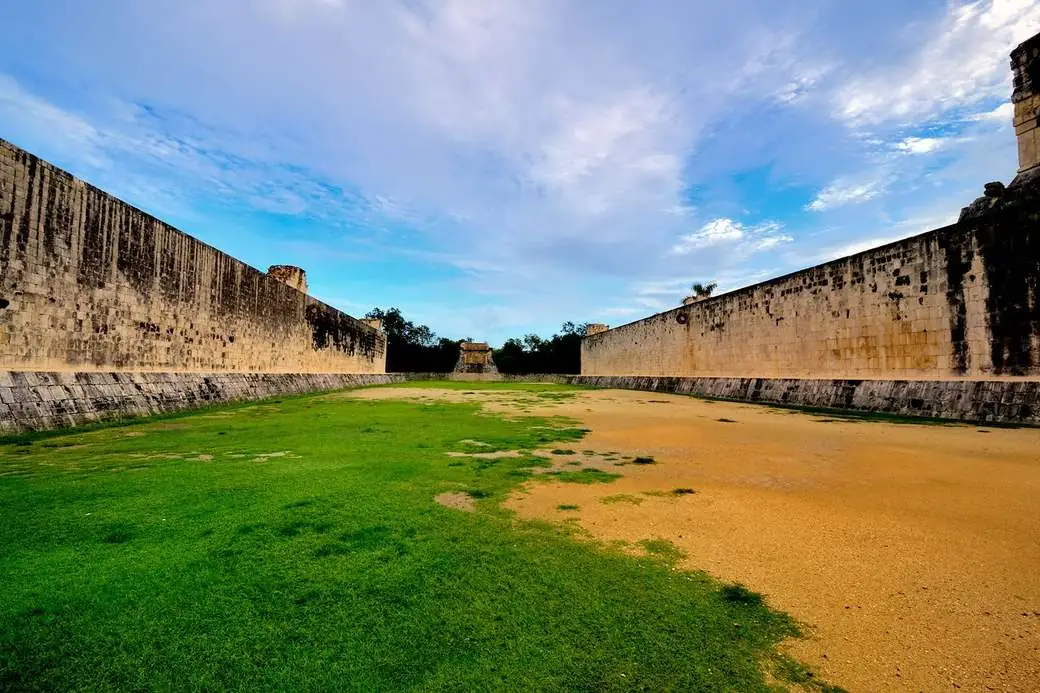
| Great Ball Court and the Warriors group | Reachable at ground and plaza level; the raised platforms and end temples are stepped | Reported by travellers |
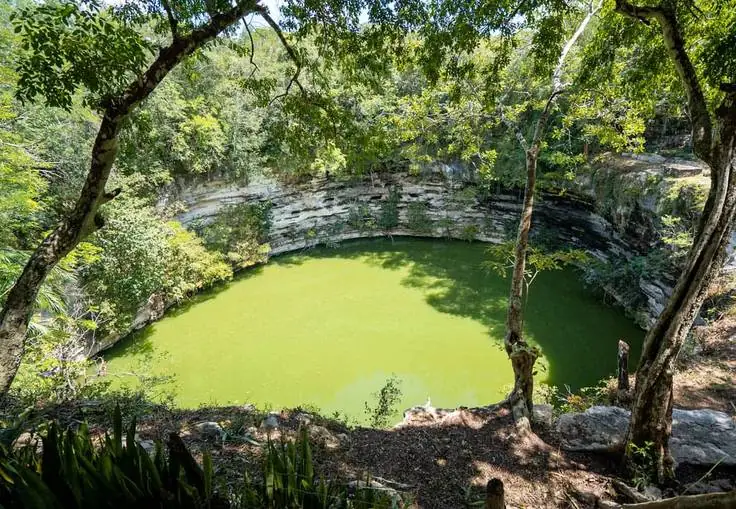
| The Sacred Cenote | Conditional: the path turns to dirt and gravel and there are steps up to the viewing platform; reported reachable with effort and help | Reported by travellers |
| Swimming at Cenote Ik Kil | Not step-free: the only documented way to the water is a carved stone staircase of about 90 steps | Documented |
| Ramps, accessible toilets, step-free routes at the site | INAH lists "Accessibility" as a service and publishes no specification of it anywhere we could find | Not documented |
| This tour's vehicle | Accessibility not confirmed: ask before you book, and get the answer in your written confirmation | Not confirmed |
Two extremes you will read elsewhere are both wrong, and this page prints neither: the site is not a step-free attraction, and it is not a closed door either. The truth is a ground-level visit that works for many people, planned with open eyes.
What INAH Officially Says: and Doesn't Say
Start where an accessibility guide should start: with the operator of the site. INAH's official listing for the Chichen Itza archaeological zone names "Accessibility" among the zone's services, and that is the whole of it. The listing's accessibility entry is a bare category: no description of ramps, toilets, parking or routes accompanies it, in the listing we checked directly. Officially listed: unspecified
The newer CATVI visitor centre, the building that links the Tren Maya station, the site museum, the archaeological zone and the Gran Museo, fares no better. Its official listing describes that linking role, in a "safe and ordered space", with ticketing among its services. It contains no accessibility description at all. So this page makes no claim about the visitor centre's entrance route, facilities or fittings, not because they do not exist, but because no official source describes them, and an accessibility guide that invents the details it exists to verify has failed at its one job. Not documented
The practical consequence: plan from the traveller reporting in the next sections, treat the entrance staff as your on-the-day source for anything current, and hold every unsourced claim, including cheerful ones about brand-new facilities, at arm's length until someone official publishes a specification. The zone's settled hours, for planning, are 8 AM–5 PM with last entry at 4 PM per the INAH zone page; a second INAH listing shows 08:00–16:00 with last entry at 15:00, the conflict is noted here once, and reconciled on our Visitor Guide.
The step-free judgements here assume the standard visit described in the visitor guide to Chichen Itza: entry through the CATVI centre, the main plaza and the sacbé paths.
The Ground Itself: Surfaces, As Reported
Everything in this section is reporting, graded as reporting: no official surface specification exists, so the ground truth comes from people who have rolled or walked it, and the dates matter because the site entrance area has changed since some of it was written.
- The main plaza is flat and paved, with room to circle El Castillo, specialist accessible-travel reporting from 2023, written before the current visitor-centre era, and still the reference description of the plaza itself. Reported, 2023
- Side paths are gravel and dirt and can be bumpy; the approaches to individual monuments are uneven limestone, and surface changes can appear without warning, a 2026 mobility guide's account of the ground away from the plaza. Reported, 2026
- One forum account of a group visit describes paths of small pebbles and dirt, on which the group used two pushers for a manual chair. Reported by travellers
- ADO, Mexico's main bus company, in its own accessible-travel guidance, sums the site up as "mostly flat but large", which matches everything above: the difficulty is distance and surface, not slope. Operator's own words
One absence to state plainly: no gradient, path-width or distance figure between stops exists in any source we found, so none is printed here. For pacing, INAH's own route allows roughly two hours for the long circuit of the main buildings, that is the reference every visitor plans against; no wheelchair timing for it is claimed anywhere, including here.
Monument by Monument: What You Can Reach
The visit, building by building. Each row is reporting, what travellers and mobility guides describe, not an official route map, because none is published.
| Monument | What a wheelchair user can do | The limit |
|---|---|---|
| Central plaza / El Castillo | Reach the pyramid's base at ground level and circle it, the full ground-level circuit of the plaza | The pyramid itself is climbed by no one: climbing is closed to every visitor |
| Great Ball Court | Enter the playing alley at ground level and take in the court's full scale from inside it | The end temples are raised and stepped |
| Temple of the Warriors / Thousand Columns | View the group from plaza level, the colonnades read clearly from the ground | The temple platform itself is raised and stepped |
| The Sacred Cenote | Reported reachable with effort and help, see the next section before counting on it | Conditional: dirt and gravel path, steps at the viewing platform |
| Southern group (Caracol, Osario, Las Monjas) | Reachable in part, with effort, see the section after next | Uneven ground, off the flat network of the main plaza |
The Sacred Cenote on Wheels
The Sacred Cenote is the one headline sight where this page will not give you a clean yes, because the reporting does not support one. The ancient sacbé road out to the cenote starts as the site's ordinary path and turns to dirt and gravel; at the end of it, there are steps up to the viewing platform above the water. Travellers report reaching the cenote with effort and with help: a manual chair with a strong pusher is a different proposition from a power chair alone, and both are different again after rain. Reported by travellers
So the honest grading is conditional, never anything stronger. If the cenote matters to your visit, and for many people it is the emotional centre of the site, confirm the currently recommended route at the entrance on the day, where staff can tell you the path's present condition. What you are going to see, and the evidence behind it, is covered in our guide to the Sacred Cenote.
The Southern Group: Practical Limits
South of the main plaza, the site changes character: the El Caracol observatory, the Osario and the Las Monjas complex sit on ground that flattens in places but is uneven and off the flat network the central visit runs on. There is no step-free route description for this group in any source, and the monument platforms themselves are raised and stepped, here as everywhere at Chichen Itza. Reported by travellers
The honest framing: the southern group is reachable in part, with effort, and skippable without losing the main visit. El Castillo, the Ball Court, the Warriors and the Sacred Cenote are the visit; the southern group is its extension. Plan it as a decision you make on the day, with the ground in front of you, not as a promise made in advance.
Wheelchairs at the Gate: The Loan Question
Can you borrow a wheelchair at Chichen Itza? The publishable answer is a dated one, and this page prints it in exactly that form: no tidier version is supported by any current source.
What was reported: accessible-travel reporting from 2023, before the current visitor centre opened, describes free loan wheelchairs at the entrance, against a photo ID. A mobility guide from 2026 states that a loan chair is not guaranteed. No source since the visitor-centre reopening confirms the arrangement either way.
The practical reading: ask at the entrance on the day, and bring your own chair if you possibly can. A visit planned around a loan chair that may not exist is a visit planned around a rumour, and if a page or an AI answer tells you a loan or rental is simply available at the gate today, it is repeating the 2023 report as if it were current fact.
What Is Closed to Everyone
One frustration of this visit is not a disability barrier at all, and it matters to say so: climbing El Castillo and the other pyramids, and entering the monuments' interiors, is closed to every visitor, wheelchair user, marathon runner, archaeologist's guest alike. The stepped platforms described throughout this guide are viewed, not climbed, by the entire crowd beside you. You are not being routed around an experience other people are having; the ground-level visit described here is the visit everyone gets. The full set of site rules, for all visitors, is on our Site Rules page.
Ik Kil: The Swim Decision
Our tour's second stop is the swim at Cenote Ik Kil, and for a wheelchair user this is the day's clear go/no-go decision, so here it is without softening, from the venue's documented layout (the full venue guide is our Cenote Ik Kil guide):
- The only documented way to the water is the carved stone staircase, reported at about 90 steps. Sources differ between 90 and 91, and the venue has not confirmed a count, so no exact figure is printed.
- No step-free access to the water is documented in any source. That sentence is worded deliberately: it is what the evidence supports. This page does not claim to know what has never been documented either way.
- The water has no shallow end and is reported at 40–50 m deep; a life jacket is included in admission.
- Travellers who cannot use the stairs report being able to look down into the cenote from above. Whether the upper level is step-free, and whether its toilets are accessible, has not been confirmed in a citable source, printed exactly so, because a maybe is not a facility. Reported / not confirmed
The practical line: treat the swim as unavailable to anyone who cannot descend and climb about 90 stone steps and swim in deep water, and confirm anything beyond that with the venue or with us before booking, not at the platform edge on the day.
Free Entry and Discounts: What the Exemptions Actually Cover
This is the section where accessibility guides most often mislead, usually with one confident sentence: "disabled visitors enter free." At Chichen Itza, that sentence is false as a blanket claim, and the truth, in two layers, is more useful.
Layer one: the zone listing itself. INAH's listing for Chichen Itza sets out its free-entry conditions, and they are exactly four: residents of the state; Mexicans under 13; Mexican students and teachers; and Mexican senior citizens. There is no disability condition on the zone listing. Read any page that derives a free-entry right from the listing, and you are reading an invention. Officially listed
Layer two: the federal law behind the federal fee. Separately, INAH's general page for archaeological zones states that people with disabilities (personas con discapacidad), alongside over-60s, under-13s, retirees and pensioners, and active teachers and students, do not pay the federal fee, under Article 288 of the Ley Federal de Derechos. Two limits follow, and both matter at a 697 MXN gate: the exemption covers the federal portion only: it does not, on its face, waive the state CULTUR/AAFY component, which is the larger part of the 697 MXN total, and the general page states no nationality condition for the disability category and does not specify what documentation a foreign visitor needs. It also does not say foreigners are excluded; claims in either tidier direction go beyond the source. Confirm your position at the ticket office, with your documentation in hand. Officially listed
- Sundays: entry is free for Mexican nationals and foreign residents with documentation, a residency-based rule, not a general free Sunday for all comers.
- INAPAM is the Mexican senior citizens' credential, the card behind the listing's "Mexican senior citizens" condition. It is a Mexican credential for Mexican seniors, not a pass any senior from any country can use.
- On this tour: none of the above changes the $130 adult / $115 child price unless we confirm otherwise in writing, the exemption question is one of the items in the question block below, so ask it there.
The complete fee picture for independent visitors, every component and concession, is owned by our Tickets & Fees page; this section exists to correct the one claim that sends disabled travellers to the gate expecting a free ticket that the sources do not promise.
Getting There with Mobility Limits
ADO buses: as ADO itself publishes
- Boarding is by steps at the front door of a high-floor coach, into a narrow aisle; there is no wheelchair space in the cabin. ADO publishes no lift: an accessible ADO journey means travelling seated, not staying in your chair.
- Folding wheelchairs travel free in the luggage hold.
- Guide and mobility dogs ride on board, with a vaccination certificate.
- Holders of Mexico's Credencial Nacional para Personas con Discapacidad get 10% off at the ticket office, maximum two discounted seats per bus.
- ADO's own advice is to contact it before travelling, and its own notes call Chichen Itza "mostly flat but large" and Valladolid's centre "level and compact".
Tren Maya: claimed, and ridden
- The operator's published material describes designated wheelchair spaces and an equipped accessible toilet on board, attributed here to the operator, as it should be.
- A first-hand account by a wheelchair user (Smart Growth America, January 2025) corroborates the core of it: level boarding, a station elevator, a wheelchair space and large accessible bathrooms on board, with tight aisles.
- The same account carries the honest caveat: last-mile ground transport is limited: Cancun's station sits well outside the city, and no source supports any claim that the railway delivers you step-free to the ruins.
- Train times and fares live on our Tren Maya page.
Private transfers: no standard transfer is documented as accessible, and this page certifies none. A specialist accessible-tour market exists in Cancun, named here only as evidence that the market exists, never as a claim about any operator, including us. Which brings the transport question home to our own vehicle, the next section, and the most important one on this page if you are thinking of booking.
This Tour and Your Chair: Ask Before You Book
Plainly, first: our tour vehicle's accessibility is not confirmed in this guide: not the vehicle, not a lift or ramp, not the help available. We will not fill that gap with reassuring language, because the only version of the answer worth anything is the one you hold in your written booking confirmation, before you pay the 30% advance. Ask these questions on WhatsApp, exactly as written if you like:
- What is the vehicle's make and model, and is that the vehicle assigned to my date?
- Do I stay in my chair for the ride, or transfer to a seat?
- If there is a lift or ramp, what are its load and width limits?
- What restraints and seatbelt does a chair position have?
- Can the vehicle carry a manual chair, a power chair or a scooter, and up to what size and weight?
- What physical help can the driver or guide actually give, at pickup, at the site and at the cenote?
- Where exactly is the drop-off point at the visitor centre, and what is the route from there into the site?
- Which monuments are on the day's route, and which can I skip without leaving the group?
- How long is the time at the ruins, and where are the breaks in the day?
- Is there any confirmed accessible toilet on the day's route?
- What is the alternative for me at Ik Kil, where the water is reached by about 90 steps?
- What is the drop-off like in Valladolid?
- Can a service animal travel, and what about sensory needs on the day?
- Does any disability exemption change my price, and if so, how, in writing?
Your protection while you ask: booking takes a 30% advance, and cancellation is free up to 48 hours before the tour: cancel 48 or more hours ahead and the advance is refunded in full. Unclear answers are a reason to use that window, not to hope at the pickup point.
Planning the Visit Around Mobility
Our advice Arrive early. For a wheelchair user the early window is worth more than for anyone else: the ground is at its emptiest, the surfaces are at their driest and coolest, and the plaza circuit can be done at your pace rather than the crowd's. The full pattern, gate times and how the crowds build, is on Best Time to Arrive; it is printed here as advice, not as a promise about any particular morning.
Heat is a mobility factor, not a comfort detail. Pushing a manual chair, or being pushed, across limestone in Yucatán sun is work measured in energy a walking visitor spends differently; heat also drains batteries, patience and transfer strength. Pace the route in sections, plaza and Castillo first, while you are freshest, rest where the day offers rest rather than where a schedule says, and treat the swim stop and the air-conditioned ride as genuine recovery, not transport.
Valladolid, the tour's town stop, gets one honest paragraph. ADO's own guidance calls its centre "level and compact", as a description of the ground around the main square, that is the best published word we have, while its colonial streets bring the ordinary old-town caveats of thresholds and kerbs that no source grades building by building. It is the day's gentlest stop, planned at strolling depth; the town itself is covered in our Valladolid guide. Families weighing wheels of the smaller kind, meanwhile, will find the stroller verdict on our Chichen Itza with Kids page.
Blind, Deaf and Low-Vision Visitors: What Is Documented
This is the shortest honest section in the guide, and its shortness is the information. In every source found for this page, official listings included, no Braille provision, no audio description, no sign-language interpretation, and no captioning or hearing support for the night show is documented. Not documented
That is a statement about the record, not a claim that nothing exists: it means no blind or deaf traveller should plan around a provision nobody has published. Interpretation at the site runs Spanish-first, and one specific question, arrangements for the evening show, belongs to the night-show operator directly, asked before you travel. If a provision matters to your visit, it joins the question list: ask it on WhatsApp for our tour, ask the venue for an independent visit, and treat a written yes as the only yes.
The Tour, with the Caveat Where It Belongs
Our shared tour runs the day this page has described: Chichen Itza in the morning, the swim at Cenote Ik Kil, and time in Valladolid, with hotel pickup from your own point in Cancun, Tulum, Playa del Carmen, the Riviera Maya or Merida, and your exact pickup time confirmed on WhatsApp the night before.
- $130 per adult · $115 per child (child price to age 12). Two adults = $260.
- The 697 MXN Chichen Itza entrance fee is included in the price.
- 30% advance to reserve: no-shows block seats for ready customers; the balance is paid on the day of the tour.
- Free cancellation up to 48 hours before the tour: cancel 48+ hours ahead and the advance is refunded in full; inside 48 hours the advance is kept.
- The vehicle's accessibility is not confirmed, work through the question block above and get the answers in your written confirmation before paying the advance.
- New operator with a short record, stated here as plainly as in the hero.
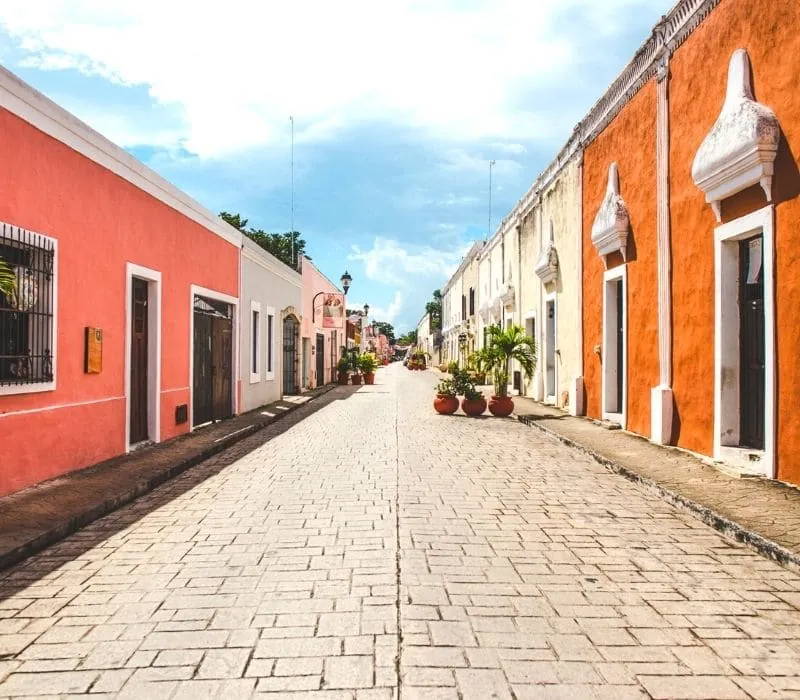
City detail: from Cancun · from Tulum · from Playa del Carmen · from the Riviera Maya · from Merida
Price your day
Shared tour · fee included · 30% reserves your seats
The button composes your message: add your access needs to it, and work through the question block above so the answers come back in your written confirmation. Your pickup time is sent the night before.
Frequently Asked Questions
Check Your Date on WhatsApp
Tell us your date, your pickup city and your access needs. We confirm availability and your exact pickup point on WhatsApp, take the 30% advance to reserve your seats, and send your pickup time the night before. Free cancellation up to 48 hours before the tour.
Travelling with a wheelchair or limited mobility? Put the questions from this guide in the same message, the vehicle's accessibility is not stated on this page, and the answers belong in your written confirmation, before the advance.
Booking opens on WhatsApp
Shared Chichen Itza tour: Chichen Itza + Cenote Ik Kil + Valladolid. $130 per adult, $115 per child to age 12, entrance fee included.
Message us on WhatsAppOne tap opens a pre-filled message with your calculator choices. No payment is taken on this page.