Chichén Itzá Equinox Guide 2027: The Serpent of Kukulkán and the Noches de Kukulkán Night Show
Two different events share one pyramid, and they are constantly confused. The equinox serpent is a free daytime phenomenon: sunlight and shadow on El Castillo, twice a year, included in the ordinary day ticket. Noches de Kukulkán is a separate paid night show, and as of our last check it is not confirmed running. This guide keeps the two apart, prints the dates and times with their sources, and shows you every place where the sources disagree instead of smoothing it over. En español: si llegaste buscando el equinoccio Chichén Itzá 2027, aquí están sus fechas y horarios con fuentes, y, por separado, Noches de Kukulkán: boletos, precio y horarios, con su estado sin confirmar dicho con claridad.
Spring equinoxSaturday 20 March 2027: serpent in the afternoon, about 3:00–5:00 PM (INAH)
Autumn equinox22 or 23 September 2027: sources disagree; both dates explained below
Equinox ticketNo special ticket: the regular day ticket covers equinox day, no surcharge
Night showA separate ticket, and its return is not officially confirmed. Check its status before planning
Full disclosure before anything else: we are a new tour operator with a short track record. Judge everything on this page, and our tour, by the written facts and terms, not by reputation we haven't earned.
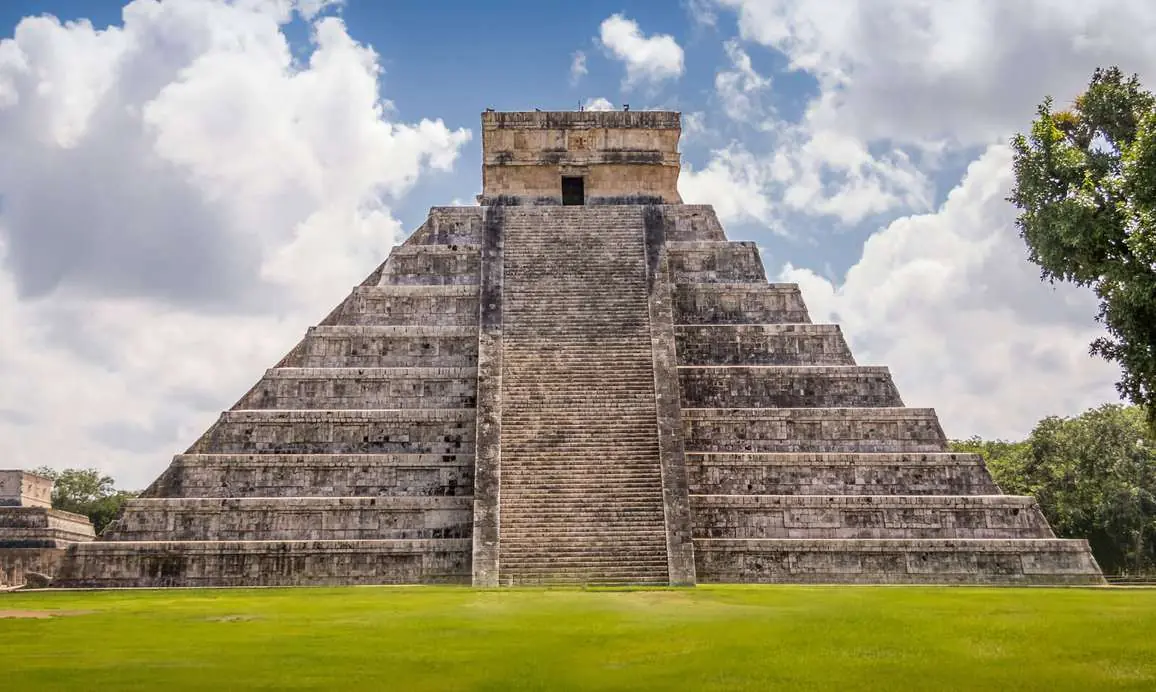
Two Events, One Pyramid
Most disappointment at Chichén Itzá starts with one mix-up: visitors arrive expecting the night show to project the equinox serpent, or expect the daytime ticket to include an evening event. Neither is true. Here is the separation, in one table:
| The equinox serpent | Noches de Kukulkán | |
|---|---|---|
| What it is | Sunlight and shadow forming a serpent on El Castillo's north staircase | A night walk through the zone, then a video-mapping projection on El Castillo |
| When | Daytime, around the March and September equinoxes; the form builds in the afternoon | Evenings, on scheduled nights: see the status warning in the night-show sections below |
| Ticket | Included in the regular day ticket; no equinox surcharge | A completely separate ticket, in both directions: neither ticket includes the other event |
| Where you watch | From the ground in front of the north staircase, in INAH's viewing areas on operation days | Inside the zone at night, on the show's own route |
| The risk | Cloud: the effect needs direct sun and can simply not appear | Status: performances were suspended in autumn 2026 and no reopening is officially confirmed |
Can you see the serpent at night? No. The serpent is made of sunlight. After dark there is nothing to see: the night show is a different product, sold separately, and it is not the equinox effect.
What the Serpent Is and Where to Stand
On the days around each equinox, the late-afternoon sun strikes the northwest corner of El Castillo at an angle that throws a pattern of seven triangles of light and shadow down the pyramid's north staircase. As the afternoon advances the triangles lengthen and join the carved serpent head at the base of the staircase, the effect INAH calls the descent of Kukulkán (Boletines 105 and 436, 2026).
You watch from the open ground in front of the north staircase. On equinox operation days INAH sets out concentration and viewing areas there and directs visitors toward them, so the practical advice is simple: be inside the site and positioned in front of the north staircase well before 3:00 PM, guide consensus, and common sense once you have seen the crowd numbers in §6. For the pyramid's architecture and the deeper geometry behind the effect, see the El Castillo guide when it publishes.
The 2027 Dates and the Visible-Days Window
Spring: Saturday 20 March 2027
Every source agrees on the spring date: Saturday 20 March 2027. One warning about a number you will see elsewhere: the astronomical instant of the equinox (about 2:24 PM Yucatán time) is not the viewing time. The serpent forms later, in the late afternoon: the instant and the shadow are two different things.
Autumn: 22 or 23 September 2027, a genuine conflict
Most travel sources give the autumn equinox as 22 September 2027. But the astronomical instant, as listed by Timeanddate, falls just after midnight Yucatán time, which makes it 23 September locally. Both dates are the same moment converted across time zones; sources simply land on different sides of midnight. We print both rather than picking one, and the afternoon viewing falls on the equinox day either way.
How many days is it visible? INAH doesn't say a number
INAH confirms the effect is visible on days before and after each equinox, and publishes no number of days. Secondary sources conflict wildly: figures range from two or three days either side, to three to five days either side, to a span running roughly 15–25 March. We will not turn any of those into a promise. What INAH's archaeoastronomy material does note is that the effect evolves across the days: by about 26 March an eighth triangle appears. The days around the equinox are not identical copies of equinox day: they are a changing version of the same effect, which is exactly why the multi-day window matters if the exact day is cloudy.
The serpent's date is set by a count this page uses but does not explain: the Maya calendar, explained takes the Long Count and the Haab' apart.
What Time It Appears
INAH has published an afternoon window for each season, and they are not the same window. Printed separately, never averaged:
- Spring: about 3:00–5:00 PM (INAH Boletín 105, spring 2026 operation)
- Autumn: about 3:00–4:30 PM (INAH Boletín 436, autumn 2026 operation)
Guide reports add finer claims: that the effect starts around 3:45 PM, looks its best around 4:30 PM, or runs 4:40–5:00 PM. Those are the guides' reports, not official times, and they do not all agree. There is also no official duration for the fully formed serpent, and this page publishes none: what INAH's windows describe is a form that builds gradually through the afternoon as the sun drops, not a show with a start time. Plan to be in position for the whole window, not to arrive for a single minute.
Spring or Autumn?
March: dry, clear, and crowded
March falls in the dry season, so the odds of the clear afternoon the serpent needs are at their best. The price is people: the spring equinox draws the year's biggest crowds to Chichén Itzá, with a full special operation to manage them.
September: quiet, with real cloud risk
September sits inside the May–October rainy season. Crowds are far smaller, but afternoon cloud and rain are a genuine risk, and cloud is the one thing that can erase the serpent entirely. We won't forecast any specific 2027 day, and March does not always win; it is a trade-off, not a verdict.
For the wider month-by-month picture, heat, rain and crowds across the year, that verdict belongs to our best month to visit Chichén Itzá guide; this page only settles the equinox choice.
Equinox Day: Crowds, the Operativo and Tickets
Equinox is one of the biggest events in the site's year, and INAH runs a special operation, an operativo, for it. INAH's published totals for the spring operation: 32,872 visitors in 2025 and 24,791 in 2026. Those are totals across each multi-day operation, not single-day counts.
The ticket: the regular day ticket covers equinox day
There is no equinox ticket and no equinox surcharge in either 2026 bulletin. You enter on the same Boleto Único as any other day: 697 MXN for foreign visitors (105 MXN INAH + 592 MXN state fee) and 310 MXN for Mexican nationals and residents, with the usual exemptions. INAH tickets are sold only at the CATVI offices at the site. For the full fee breakdown see Chichén Itzá tickets and fees.
How the 2026 operativo worked: historical detail, not a 2027 promise
No 2027 operativo notice exists yet. What follows is how INAH ran 2026, published so you can picture the day; expect the 2027 notice to set its own hours, and check it before you travel.
Spring 2026 (20–22 March): Friday 20 March opened at 9:00 AM, Saturday and Sunday at 8:00 AM. Ticket sales and access closed at 4:00 PM and the site was evacuated by 5:30 PM. From 3:30 PM, access to the Ball Court, Osario, Observatory, Nunnery and Thousand Columns closed so visitors concentrated in front of El Castillo. The Gran Museo opened 8:00 AM–3:00 PM via the Sacred Cenote route, Chichén Viejo (Serie Inicial) was suspended for the operation, public ceremonies were prohibited, and drones, tripods and professional equipment needed an INAH permit. A long banned-items list applied: flammables, cigarettes including e-cigarettes, costumes, tarps, branded flags, alcohol, sharp objects and ashes among them. Tour buses exited through visitor-centre doors 5, 6 and 9.
Autumn 2026 (20–21 September): ticket offices ran from 8:00 AM with last ticket and entry at 4:00 PM. From 4:00 PM, access was restricted to a listed set of areas: the Ball Court, Thousand Columns, Casita Maya, Cenote Xtoloc, Osario and Observatory, with no Chichén Viejo and no Gran Museo, and medical and evacuation provision on site. Similar bans applied.
If the day itself is too much: INAH's own bulletins name the alternatives it promotes for the busiest period: Izamal, Ek Balam, Uxmal and Kabah, and the serpent's window (§3) means a day either side of the equinox, inside the same site, is a calmer way to see a version of the same effect.
The serpent is one afternoon inside a full site visit; the visitor guide to the site covers the hours, the entry and the rest of the day around it.
If It Is Cloudy
Say it plainly: the serpent is sunlight. Heavy cloud cover hides or breaks the triangles, and on a fully overcast afternoon there may be no serpent at all, on the equinox itself, with the whole crowd watching the same blank staircase.
What happens to your money? No refund or re-entry policy for a cloudy equinox was found in any source: not in INAH's bulletins, not in the guides. This page won't invent one. The real mitigation is not a same-day fix; it is the multi-day window: the effect is visible on days before and after the equinox, so a trip built with a spare day near the date has a second chance that a single-day dash does not. Guides who cover the equinox give the same advice in reverse: if the exact day is your only day and the forecast is hopeless, that is the day to weigh skipping; if you have flexibility, the neighbouring days are the hedge.
Can a Daytime Tour Show You the Serpent?
This is the section most tour pages will never write, so read it before you book any equinox tour, ours included.
The honest position: our shared tour visits the ruins, Cenote Ik Kil and Valladolid in one day. The serpent appears only in the afternoon and only in clear sun. The tour's on-site hours are confirmed on WhatsApp the night before, and seeing the effect cannot be guaranteed, by this tour or by any daytime tour. We do not run a special equinox schedule, and we will not imply that booking this tour puts the serpent in front of you.
What to ask any operator before paying for an equinox-date tour:
- Will the group still be inside the site between 3:00 and 5:00 PM on that date, in writing, not in a sales reply?
- What happens to the itinerary on operativo days, when INAH closes areas from mid-afternoon and evacuates the site early evening?
- If it is cloudy and there is no serpent, what, if anything, do you get back?
An operator who answers those three questions straight is worth more than one who promises you the serpent. For ordinary (non-equinox) dates, the early-entry strategy is covered in our early access guide.
Noches de Kukulkán: What the Night Show Is
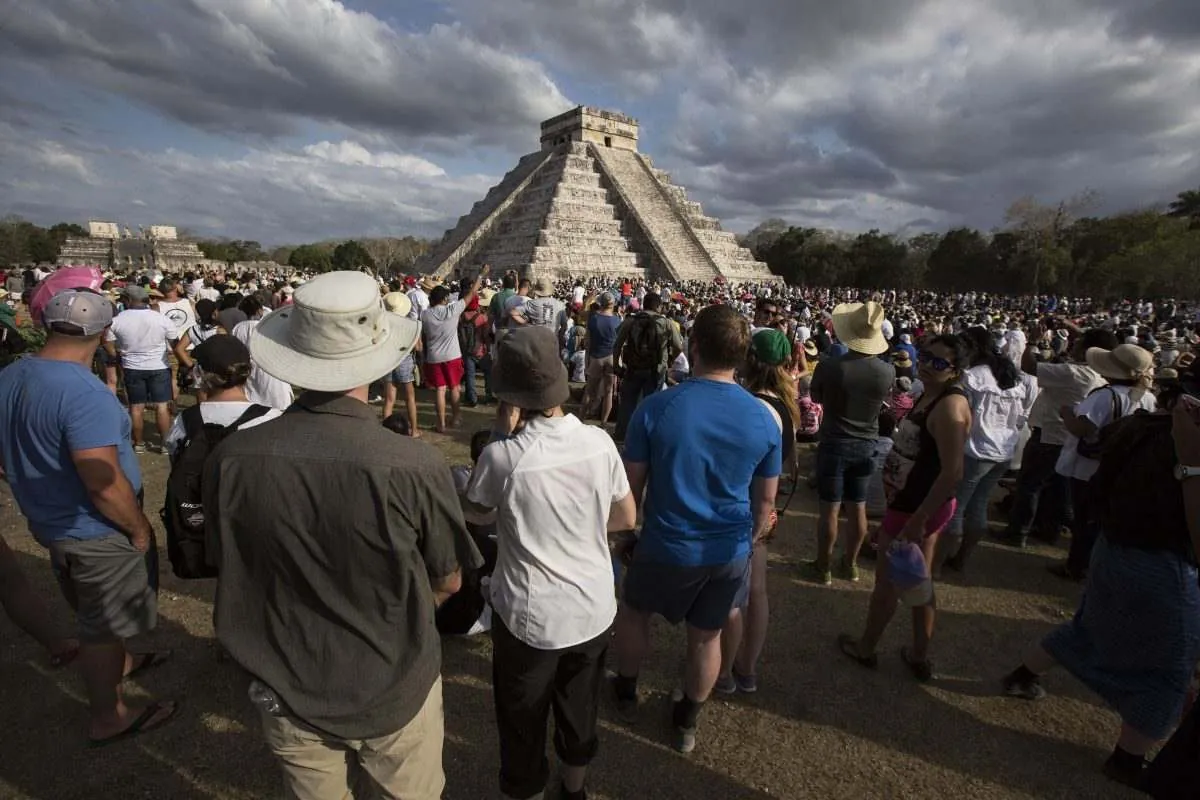
Noches de Kukulkán is Chichén Itzá's official night event: a night walk through the archaeological zone followed by a video-mapping projection on El Castillo, the pyramid lit with animated imagery while a narration plays. The official listing gives the audio in Spanish; no English performance is published, and this page claims none.
It is a completely separate ticket from daytime admission, in both directions. Your day ticket does not get you into the night show, and a night-show ticket does not include a daytime visit. The two events share a pyramid and a name, nothing else. It is also, in duration, a modest event: a night walk plus a projection of roughly half an hour, with the whole visit longer than the projection itself. Sources conflict on exact durations, so we publish none.
Is the Night Show Running?
Status, checked 9 November 2026: the show was suspended in autumn 2026, and its reopening is not officially confirmed. Dated October 2026 reporting says CULTUR suspended performances for equipment work and that the show remained on pause; November listings hint at a return, but no dated official reopening announcement was found, and a live check of the official booking portal on 9 November 2026 showed "No hay fechas disponibles": no bookable dates. We will not call it operating, and we won't call it permanently closed either. Check the official portal before planning a trip around it.
Why print a warning instead of a schedule? Because plenty of pages still list this show as a routine evening attraction, and travellers build nights in Pisté or Valladolid around it. Until CULTUR publishes a reopening and the portal shows dates again, the only honest status is the one above, and this page re-checks it rather than letting it quietly go stale.
Night-Show Nights, Times and Prices
When the show runs, CULTUR and guide listings schedule it Wednesday to Sunday. The start time is itself a conflict: the official listing gives 7:00 PM, while one AI summary claims gates at 7:00 PM with the projection at 8:00 PM. We publish that as a reported conflict, not a fixed promise, and one widely cited seller page contradicts itself (claiming both "every night" and Wednesday–Sunday) while giving no start time at all, which tells you how carefully to read night-show listings generally.
Prices: a conflict table, because there is no single price
Listings disagree by hundreds of pesos. Every figure below is labelled with its source; the official tariff stands first. Older figures of 200–350 MXN still circulating online are stale.
| Source | Standard | Mexican nationals, Sunday |
|---|---|---|
| CULTUR official tariff, effective 1 February 2026 | 1,163 MXN | 730 MXN |
| Yucatán Today listing | 708 MXN | 450 MXN |
| chichenitza.com price box | 772 MXN | 355 MXN |
| ToTravelToo | 755 MXN | Not listed |
Child pricing is not published. The sources we checked contradict each other on children and the official tariff could not be read directly on this point, so this page states it as unconfirmed rather than printing a figure. Tickets are sold through the official portal (nochesdekukulkan.com.mx / boletos.cultur.com.mx) and at the site ticket office, reported as selling from 3:00 PM on show days.
Can You Combine the Equinox and the Night Show?
The dream day, serpent in the afternoon, projection at night, one trip, has only a historical answer. In spring 2026, Noches de Kukulkán ran on the Friday of equinox weekend only (20 March), at 7:30 PM, and was cancelled on the Saturday and Sunday of that weekend. So even in a year when both events exist, the combination existed on exactly one of the three operativo days.
For 2027, no combination can be promised until both schedules are published: INAH's 2027 operativo notice does not exist yet, and the night show's return is unconfirmed (§10). If a seller promises you the combined equinox-plus-night-show day for 2027 today, they are promising two unpublished schedules at once.
The Shared Tour: and What It Honestly Means for the Equinox
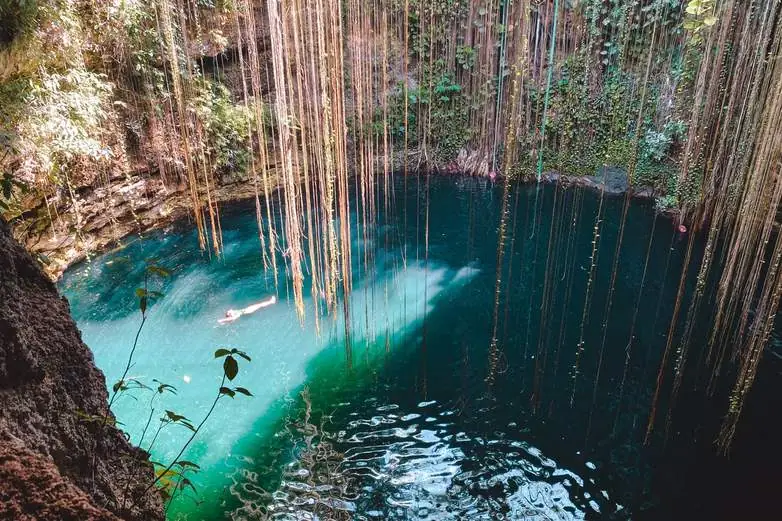
The shared tour runs Chichén Itzá + a swim at Cenote Ik Kil + Valladolid in one day, with pickup from your hotel or pickup point. $130 per adult, $115 per child up to age 12, and the 697 MXN Chichén Itzá entrance fee is included in that price. Reserve with a 30% advance; the balance is paid on the day of the tour. Free cancellation up to 48 hours before the tour, with the advance refunded in full.
And the §8 line, repeated where the booking happens: the serpent appears only in the afternoon and only in clear sun; the tour's on-site hours are confirmed on WhatsApp the night before, and seeing the effect cannot be guaranteed. If the equinox serpent is the whole point of your trip, plan around §§3–7 first, possibly with a spare day, and treat any tour as transport and guiding, not as a guarantee.
Pickup cities: Cancun · Tulum · Playa del Carmen · Riviera Maya · Merida. General hours and planning live in the visitor guide.
Price calculator
Total$260
30% advance to reserve$78
Balance on the day$182
The 697 MXN Chichén Itzá entrance fee is included in the price above. Free cancellation up to 48 hours before the tour.
Continue on WhatsAppEquinox & Night Show Questions
When is the Chichen Itza equinox in 2027?
In spring, the equinox falls on Saturday 20 March 2027, every source agrees. In autumn, sources disagree: most travel sources say 22 September 2027, while the astronomical instant converts to just after midnight Yucatán time on 23 September. This page prints both dates rather than picking one.
What time does the serpent appear at Chichen Itza?
In the afternoon. INAH's spring 2026 bulletin gives a window of about 3:00–5:00 PM, and its autumn 2026 bulletin gives about 3:00–4:30 PM. The form builds gradually through the afternoon; no official start time or duration for the fully formed serpent is published.
How many days is the equinox visible at Chichen Itza?
INAH confirms the effect is visible on days before and after each equinox but publishes no number of days. Secondary sources conflict, figures range from a couple of days either side to a span of about ten days, so no count on this page is stated as fact.
Can you see the equinox serpent at night?
No. The serpent is sunlight and shadow on El Castillo's north staircase; it exists only in daylight. Noches de Kukulkán is a separate night event, a walk and a video-mapping projection, not the equinox effect.
Is Chichen Itza open on the equinox?
Yes. The site opens under a special INAH operation on equinox days, and the regular day ticket covers entry, there was no equinox surcharge in INAH's 2026 bulletins. The 2027 operation details have not been published yet.
How crowded is Chichen Itza at the equinox?
It is among the busiest times of the year. INAH counted 32,872 visitors across the 2025 spring operation and 24,791 across the 2026 spring operation. Those are totals for the whole multi-day operation, not single-day figures.
What happens if it is cloudy on the equinox?
The effect needs direct sun, so cloud cover can hide or break the triangles and there may be no serpent that day. No refund or re-entry policy for a cloudy equinox was found in any source; the practical protection is the multi-day window around the date.
What days is the Noches de Kukulkan show?
When it runs, the show is scheduled Wednesday to Sunday, according to CULTUR and guide listings. But the show was suspended in autumn 2026 and no official reopening has been confirmed, the official booking portal showed no available dates when checked on 9 November 2026.
How much is the Chichen Itza night show?
Listings disagree. CULTUR's official tariff effective 1 February 2026 is 1,163 MXN standard, or 730 MXN for Mexican nationals on Sundays. Other listings show 708/450 MXN (Yucatán Today), 772/355 MXN (chichenitza.com) and 755 MXN (ToTravelToo). Child pricing is not published.
Do you need a separate ticket for the night show?
Yes. Noches de Kukulkán is a completely separate ticket from daytime admission, in both directions: the day ticket does not include the night show, and a night-show ticket does not include a daytime visit.
¿Cuándo es el equinoccio en Chichén Itzá?
En primavera, el sábado 20 de marzo de 2027. En otoño, las fuentes no coinciden: la mayoría indica el 22 de septiembre de 2027, pero el instante astronómico equivale a poco después de la medianoche, hora de Yucatán, del 23 de septiembre. El efecto se ve por la tarde, con sol directo.
Can a tour guarantee you will see the serpent?
No. The serpent appears only in the afternoon and only in clear sun, and no daytime tour can guarantee either. Our shared tour's on-site hours are confirmed on WhatsApp the night before the tour; ask any operator the same question before you book.
Check Your Date on WhatsApp
Tell us your date and pickup city and we will confirm availability, your pickup point and the exact pickup time, the night before the tour, your confirmed time comes on WhatsApp as well. Planning around the equinox? Ask us the §8 questions; you will get the honest answers, in writing.
30% advance reserves your seats · balance on the day · free cancellation up to 48 hours before
Message us on WhatsApp
Booking opens on WhatsApp: that is where dates, pickup points and times are confirmed.