Almost every Chichen Itza tour looks the same in a listing: a pyramid photo, a cenote, a low headline price. The differences that decide your day, what you actually pay, how long you actually get inside the ruins, whether the terms exist in writing, are the ones listings leave vague. These ten checks close those gaps. Run them on any tour, from any seller, before you pay anything. Si se pregunta cómo elegir un tour a Chichén Itzá, y qué tour a Chichén Itzá es mejor para su viaje, estas diez comprobaciones son la respuesta.
One disclosure, up front: this guide is written by a tour operator, we run the shared Chichen Itza tour sold on this site. The checks below are deliberately written so you can run them on any tour, including ours, and a later section of this page does exactly that to our own tour, printing the answers we can confirm and naming the ones that are only confirmed in writing on WhatsApp before you pay. If a check makes our tour look worse than another option for your trip, use it anyway, that is what the checks are for.

A Chichen Itza tour price has three layers, and most listings only show you the first. Layer one is the headline. Layer two is the entrance fee: Chichen Itza charges 697 MXN per adult visitor, 105 MXN federal (INAH) plus 592 MXN Yucatán state charge, and a large share of tours do not include it. Layer three is the extras charged on the day: cenote lockers, life jackets, drinks, and anything else the fine print separates out. Your real total is all three layers added together, per person.
Do the arithmetic on the market's best-known bargain and the mechanism is plain. A tour advertised at $49 looks unbeatable until you read what the base excludes: the ruins admission is not in it, so the 697 MXN entrance fee is paid on top at the gate; the cenote lockers and life jacket are charged extra; and the cenote on the itinerary is Saamal, even though the listing's own web address names Ik Kil. None of that is hidden, exactly. It is just never added up for you.
Take the headline, add 697 MXN if the fee is not included, add every extra the listing charges separately, and compare that total, never the headline, against other tours. If a seller will not confirm in writing whether the fee is inside the price, treat it as outside.
For orientation, the market falls into rough bands: budget bases around $35–$59 before the fee and extras are added; typical shared tours around $90–$150; and an all-inclusive tier reaching about $199. A mid-band price with the fee already inside can be cheaper in real terms than a bargain base with everything bolted on. For the fee itself, how it is made up and what it costs to go independently, see Chichen Itza tickets and entrance fees. For named tours with their real totals worked out side by side, see the best Chichen Itza tours comparison.
Check 1 is the total; the anatomy of a Chichen Itza tour price takes that total apart so each check below has something to measure.
Two different numbers hide behind the phrase "time at Chichen Itza," and listings quote whichever is larger or whichever sounds better. The first is the guided portion: the time you spend walking with the guide. The second is the total time inside the site: from the moment you pass the entrance to the moment you walk out, guided time and free time together. A listing that advertises a "1.5-hour guided tour" is naming only the guided portion; it tells you nothing about how long you are inside in total, and the gap between the two numbers is where rushed tours live.
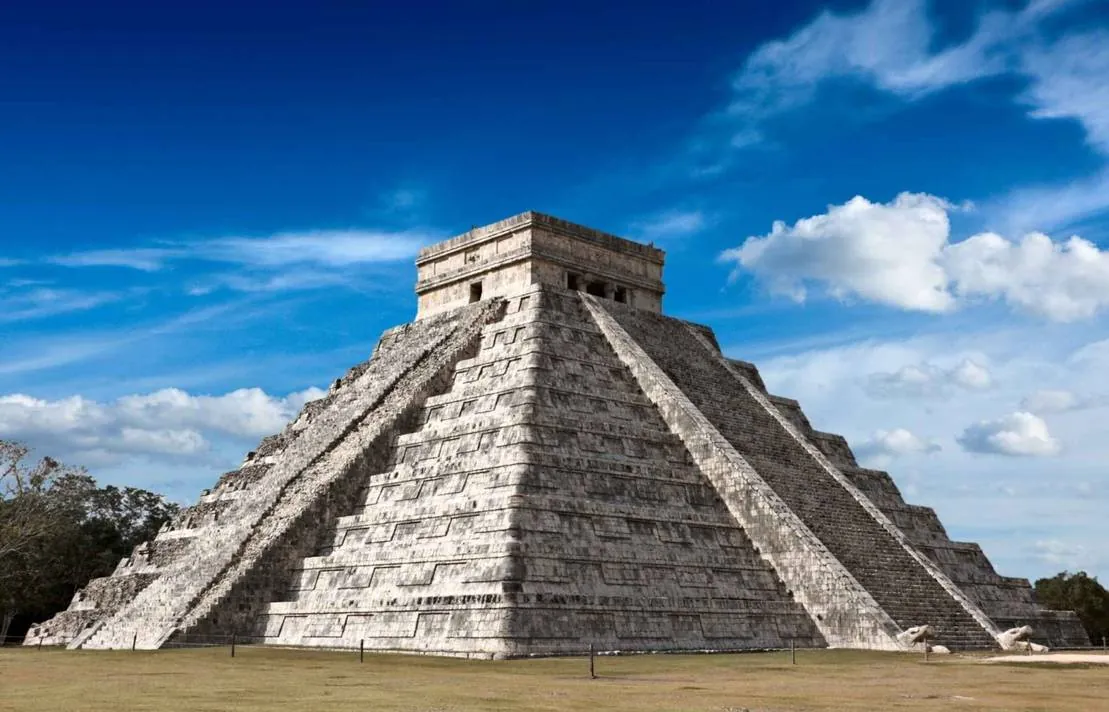
Our recommendation, labelled as exactly that: 2 to 3 hours total inside the site is the range to aim for. That is enough to see El Castillo, the Great Ball Court, the Temple of the Warriors and the Sacred Cenote properly, with time to look rather than just arrive, photograph and leave. Under about 90 minutes total inside, treat the tour as rushed, you will be moved past major structures to keep a schedule built around everything except the ruins.
Ask one question and get the answer in writing: "How much total time do we spend inside the archaeological site?" If the answer names only a guided portion, ask again. A seller who knows the answer answers it directly.
"Early" is the most abused word in Chichen Itza marketing, because it quietly swaps two different times. An early pickup is not early entry. No standard tour enters the site before the 8:00 AM opening, that is when the gates open, for everyone. What an early product actually buys you is arrival at the opening: you are at the gates as they open, in the coolest, quietest part of the day. A standard tour, by contrast, typically reaches the ruins around 10:00 to 11:00 AM, into the heat and the day-trip crowds.
Neither is automatically wrong, a later arrival still gives you the same buildings. But they are different products at what is often the same price, and the pickup time tells you nothing by itself: a 4:30 AM pickup that still arrives at 10:30 has bought you a longer bus ride, not an earlier ruin.
Ignore the pickup time and ask for the arrival time at the ruins. Judge every "early" claim against the 8:00 AM opening. How early-access products work in detail is covered on the early access Chichen Itza tour page.
Format changes the day more than almost anything else on this list, so treat the three formats as questions to answer, not labels to trust. A shared tour puts you in a group with other travellers: the lowest price per person, a fixed itinerary, and pickup stops at other hotels on the way. A small-group tour promises fewer people and usually a higher price. A private tour is your party only: your timing, your pace, and a price quoted for the group rather than the seat.
The trap is in the middle label. "Small group" has no standard definition in this market, no authority sets a maximum, and sellers use the phrase for very different numbers. The words alone guarantee nothing; the only version of the promise that means anything is a number, given in writing, that the seller can be held to.
Whatever the format, get the maximum group size in writing before you pay. "Maximum" is the word that matters: an average group size describes other people's tours, not yours. If private is on your shortlist, the private Chichen Itza tour page sets out how private pricing and quoting work.
Start with the fact that surprises people: a guide is not required at Chichen Itza. You can enter and walk the site without one, and plenty of visitors do. So the question is never "is a guide included because one is mandatory?": it is "what does guiding add, and is it part of this price?"
What it adds is the layer the stones do not explain themselves. The site's own signage is minimal, and without interpretation the buildings are impressive shapes; with it, the ball court's acoustics, the carvings on the Temple of the Warriors and the equinox shadow on El Castillo become a story you can follow. Whether that is worth paying for is a genuine judgement call, but it should be a call you make knowingly, not one made for you by a listing that never says whether a guide is in the vehicle, at the site, or not involved at all.
There is also a credential worth knowing. Official guiding in Mexico sits under a SECTUR federal credential (the NOM-08 standard), and guiding inside the archaeological zone requires INAH authorisation on top of it. A listing that names its guides' credentials is answering this check for you; one that says only "expert guide" is using an adjective where a credential should be.
Ask: is a guide included in the price, will the guide be with us inside the site, and are they credentialed? The guided Chichen Itza tour page covers the credential system and the option of hiring a guide at the gate in full.
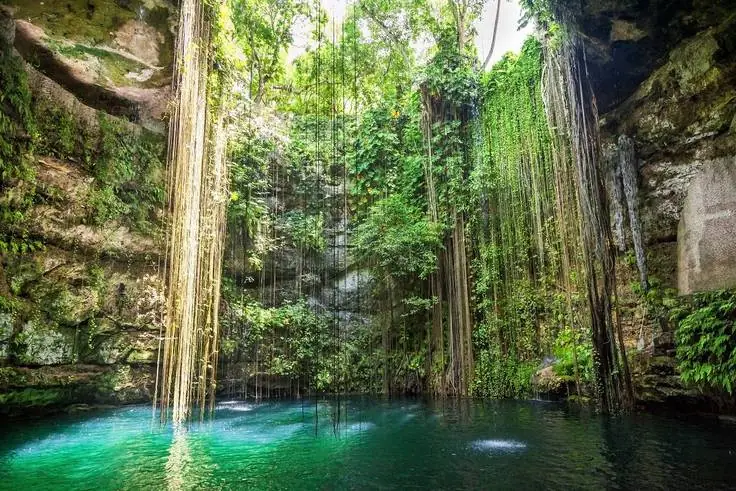
Nearly every Chichen Itza tour includes a cenote swim, and the cenotes near the ruins are not interchangeable. Some are famous for a reason; others are simply the one a route passes. So the simplest check on this whole page is also one of the most revealing: does the listing name its cenote? A tour that says only "a beautiful cenote" is asking you to buy a stop it will not identify, and a tour that will not name its cenote before you pay is telling you something about how it handles every other detail too.
The live example is the one from Check 1: the market's best-known budget listing points its web address at Ik Kil, the famous open cenote three kilometres from the ruins, while the itinerary it actually runs stops at Saamal. Both are real cenotes and a swim at either is a good swim, the issue is not which one is "better," it is that the name you were sold and the name you get are different.
Ik Kil also gives you the worked example for the money side of this check. On the cenote's own official site, admission is 240 MXN for an adult, with the life jacket and locker included in that ticket. So for any tour stopping at Ik Kil, the question writes itself: is that admission inside your tour price, or are you paying it, and the extras, again at the cenote?

Get the cenote's name, then ask whether its admission, and the life jacket and locker, are included in your price. The cenotes themselves are compared on the cenotes near Chichen Itza page, and how the combined day runs is on the Chichen Itza and cenote tour page.
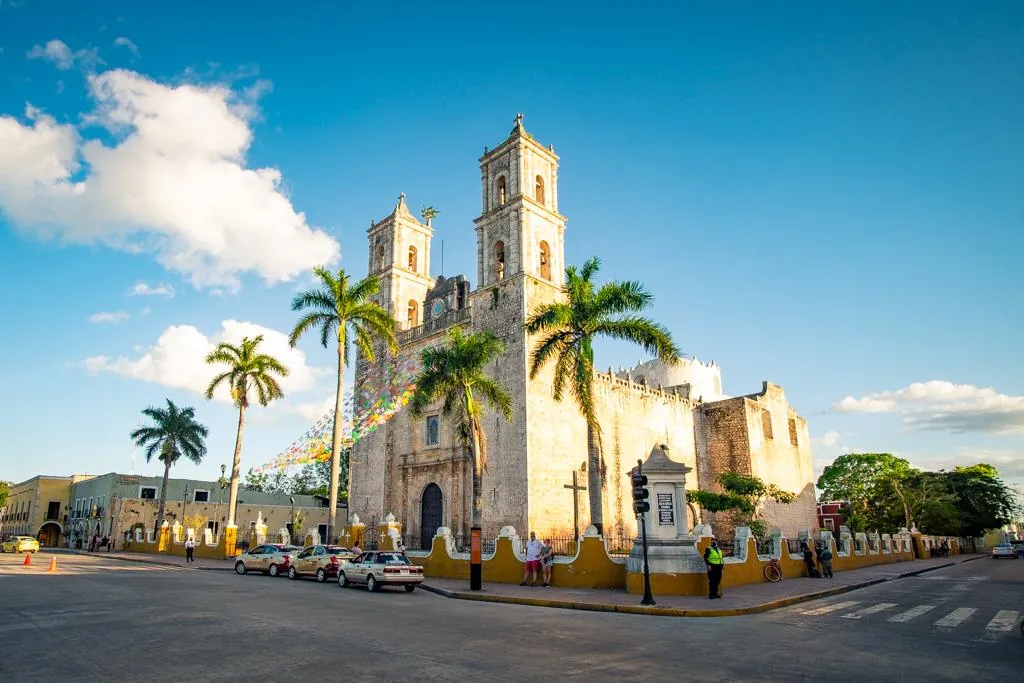
Many itineraries list Valladolid, the colonial town on the road between the ruins and the coast, and the word covers two very different experiences. A real stop means time on foot in the town: the main square, the San Servacio church, a cenote in the middle of town, time to buy a marquesita or just sit in the shade. A drive-by means the town appears in the itinerary and in the bus window at roughly the same moment, a photo pass, or a brief pause that exists so the itinerary can carry the name.
Neither is a scandal. A drive-by costs you nothing and the drive passes the town anyway. But if Valladolid is one of the reasons you chose a particular tour, you are owed the version you imagined, and the listing's wording will rarely settle which one is on offer.

Ask: how long is the Valladolid stop, and is it time on foot in the town? A number of minutes, in writing, separates a stop from a drive-by. The town itself is covered in the Valladolid guide.
"Pickup included" and "pickup from your hotel" are different promises, and the distance between them is measured at 5 AM in a hotel lobby. Some tours collect you from your own hotel or a point you choose. Others collect you from a meeting point, which may be another hotel, a plaza, or a spot a taxi ride away from where you are sleeping. Gated resorts and restricted properties add a wrinkle: some vehicles cannot enter, so even a "hotel pickup" can mean the main gate rather than the lobby. None of this is unreasonable. All of it should be known before you book, not discovered the night before.
The model that protects you is a written one: your pickup point agreed when you book, and your exact pickup time confirmed in writing the night before, once the next morning's route is set. That is the arrangement this site's own tour uses, and it is worth asking any operator for the same, a seller who confirms times in writing, in advance, is a seller you can plan a morning around.
This is the check that protects your money, and it comes with a warning about itself: there is no single established norm for deposits and cancellation on Chichen Itza tours, whatever any guide, including this one, might imply. Anyone who tells you "all reputable operators do X" is inventing a standard. What actually exists is a range of published terms, observed across operator terms pages and major booking platforms in November 2026: free cancellation up to 24 hours before the tour is common on the major booking platforms; 48-hour free-cancellation windows exist among operators who sell direct; some operators keep around 50% of the price inside their cancellation window; and some apply penalties from as far out as 4 days before the tour.
So the check is not "does this operator match the norm?": there isn't one. The check is whether the numbers exist in writing at all. Three things should be stated, in writing, before you pay: the deposit (how much, and to reserve what), the balance (how much remains, and when it is paid), and the cancellation deadline (the moment after which your deposit stops being refundable, and what happens inside the window). A deposit itself is not a red flag, operators who reserve seats against no-shows have a real reason to take one. A deposit with no written terms attached is the red flag.
Before paying anything, have the deposit, the balance timing and the cancellation deadline in writing: in the chat, in the confirmation, somewhere you can scroll back to. Verbal terms are no terms. This site's own booking rules are published in full on the Terms & Conditions page, which is where any operator's should be.
The last check is about who you are paying, and Mexico gives you real tools for it, tools most visitors never learn exist. Legitimate tourism businesses register in the Registro Nacional de Turismo (RNT), SECTUR's national tourism registry, which you can search yourself at rnt-consulta.sectur.gob.mx. Consumer complaints against businesses are also recorded in PROFECO's Buró Comercial, the federal consumer agency's commercial bureau. Neither lookup takes long, and an operator who is findable in the registry has at least put its legal identity on record.
The second verification costs nothing and takes ten seconds: check that the WhatsApp number you are paying matches the business. The name on the WhatsApp Business profile should match the business name on the website that gave you the number. Scams in this market rarely invent operators from nothing, they clone a real name and swap the number, so the number-to-name check is the one that catches them.
Reviews belong in this check too, read properly. Compare like with like, the count, how recent the reviews are, and which platform they sit on, rather than treating a star average as a verdict. Read the recent, specific reviews (our guide to how to spot fake tour reviews covers the patterns that give them away), and read how the operator responds to the critical ones; a listing's manners under criticism tell you more than its average. And hold both ends of the logic at once: having no reviews does not automatically mean fraud, every operator starts somewhere, and a new operator who tells you plainly that it has none is being straight with you, but an operator you cannot verify at all is a walk-away. Registration, it is also worth saying, is not a guarantee of quality: it proves an identity is on record, not that the tour is good.
Look the operator up in the RNT, glance at PROFECO's Buró Comercial, and match the WhatsApp number to the business name before you pay. The About page walks through the RNT lookup step by step for this operator.
The honest verdict, from a page that sells tours: going on your own is viable, and for the right traveller it is the better choice. If you are comfortable driving in Mexico, a rental car or your own vehicle lets you set the timing entirely, arrive at the 8:00 AM opening, leave when you are done, add stops where you like, and it can work out cheaper, particularly for a group splitting one car's costs. The entrance fee is the same 697 MXN whoever you are, paid at the gate. Nothing about the site requires a tour: there is no entry rule a tour satisfies for you.
What a tour actually buys, then, is logistics. Transport arranged from your hotel door and back. The entrance fee handled inside the price instead of at a gate queue. The day timed backwards from the opening so you are not doing motorway maths at dawn. And one thread, one chat, one confirmation, where the whole day is organised and where problems on the day get solved. If you are weighing the two honestly, weigh those things, because they are the whole product.
One phrase to decode while you compare: "skip the line." On a Chichen Itza tour it means the ticket-purchase queue is handled for you: your entrance ticket is pre-bought or combined into the tour price, so you do not queue at the gate to buy one. It does not mean a separate entrance, and no tour walks you past everyone else into the site. The full transport comparison for going independently, car, bus, train and tour side by side, is on the how to get from Cancun to Chichen Itza page.
The ten checks compress into seven questions. Copy this block, paste it into any operator's WhatsApp chat, ours included, and judge the tour by how completely the answers come back, in writing.
The whole page in one block. A tour that passes all ten is a tour you can book with your eyes open; a tour that fails one is not automatically a bad tour, but you should be failing it knowingly, at a price that reflects it.
As promised in the introduction: our own shared tour, Chichen Itza, a swim at Cenote Ik Kil and a stop in Valladolid, put through the same ten checks. The answers we can confirm are printed as confirmed. The ones we cannot are answered exactly as a customer hears them: group size, guide arrangement and lunch are confirmed in writing on WhatsApp before you pay. We are a new operator with a short record of customer reviews, stated here, in Check 10's row, rather than dressed up.
Run the same ten checks on us: this site's Chichen Itza tour publishes its total, its advance and its cancellation position for exactly that test.
| Check | This tour |
|---|---|
| 1. Real total price | US$130 per adult, US$115 per child up to age 12, and the 697 MXN entrance fee is included in that price. Nothing to pay at the gate. Compare that total, as Check 1 says, against any headline-plus-fee total. |
| 2. Total time inside | Ask us for the total time inside in writing in the WhatsApp thread before you book, and judge the answer against the 2–3 hour target like any other tour's. |
| 3. Arrival time | Ask us for the arrival time at the ruins in the same thread, judged, as Check 3 says, against the 8:00 AM opening, not against the pickup time. |
| 4. Group format | A shared tour. The maximum group size is confirmed in writing on WhatsApp before you pay, we do not publish a "small group" label without the number behind it. |
| 5. Guide | The guide arrangement is confirmed in writing on WhatsApp before you pay, including whether guiding is inside the site, ask the Check 5 questions in the thread and keep the answers. |
| 6. Cenote, by name | Cenote Ik Kil, named here, as Check 6 demands. Whether its admission is handled inside the tour price or at the cenote is confirmed in writing in your booking confirmation; Ik Kil's own ticket (240 MXN, jacket and locker included) is the benchmark from Check 6. |
| 7. Valladolid | A stop in Valladolid is part of the itinerary. Ask in the thread how long the stop runs, and hold us to the answer like any operator. |
| 8. Pickup | Pickup is from your own hotel or a pickup point you choose, and your exact pickup time is confirmed on WhatsApp the night before the tour, the written model Check 8 recommends. |
| 9. Terms in writing | 30% advance to reserve; the balance is paid on the day of the tour; free cancellation up to 48 hours before the tour. Published in full on the Terms page before you pay anything, not just quoted in a chat. |
| 10. Verify us | We are a new operator with a short record of reviews, stated plainly, as Check 10 says a straight operator should. Verify what can be verified: the About page sets out who runs this and walks through the RNT registry lookup step by step. |
Your message, composed from the calculator: Hi, I would like a quote for the shared Chichen Itza tour from Cancun for 2 adults. Total $260: is the 697 MXN entrance fee included in that total? The full tour, city by city, is on the homepage.
Run ten checks on any listing before you pay: the real total price with the entrance fee added, the total time inside the ruins (not just the guided part), the arrival time, the maximum group size in writing, the guide arrangement, the cenote's name, whether Valladolid is a real stop, pickup from your hotel or a meeting point, the deposit and cancellation terms in writing, and whether you can verify the operator. The checks on this page walk through each one.
At minimum: round-trip transport from your departure city, the 697 MXN Chichen Itza entrance fee (or a clear statement that you pay it at the gate), time inside the ruins with guiding or a clear guide option, a named cenote stop, and pickup terms stated in writing. Anything a listing will not state in writing, the cenote's name, the group maximum, the cancellation deadline, treat as not included until it is confirmed.
Usually because the $49 headline is a base price, not the total. On the best-known example, the base excludes the ruins admission, the 697 MXN entrance fee is paid on top, lockers and life jackets are charged extra, and the cenote on the itinerary is Saamal, not the Ik Kil shown in the listing's web address. A $130 all-in price that already includes the 697 MXN fee can end up closer than the headlines suggest. Always compare totals, not headlines.
Aim for 2 to 3 hours total inside the site, that is our recommendation, and it is the range that lets you see El Castillo, the Great Ball Court, the Temple of the Warriors and the Sacred Cenote without rushing. Under about 90 minutes total inside is rushed. Beware listings that quote only a guided portion, such as a 1.5-hour guided tour: ask for the total time inside, in writing.
No. A guide is not required to enter Chichen Itza, and you can visit without one. What a guide adds is the story behind the carvings and buildings, the site's own signage is minimal. If guiding matters to you, check that the guide holds a SECTUR federal credential and INAH authorisation, and ask whether guiding is included in the price or hired separately.
It can be, if 'early' means arriving at the 8:00 AM opening, the coolest, quietest part of the day. No standard tour enters before the 8:00 AM opening, so an early pickup is not early entry; what you are buying is arrival at the opening rather than the standard 10:00 to 11:00 AM arrival. Judge the product by its stated arrival time at the ruins, not by its pickup time.
Ask: is the total price inclusive of the 697 MXN entrance fee? How much total time do we get inside the ruins? What is the maximum group size? What is the guide arrangement? Which cenote do we swim at, by name? Is pickup from my hotel, and when will I know the exact time? And what are the deposit, balance and cancellation terms? The full copy-ready script is in the Questions to Ask on WhatsApp section of this page.
There is no single established norm. Published operator terms range from free cancellation up to 24 hours before the tour on major booking platforms, to 48-hour free-cancellation windows among direct operators, and some operators keep around 50% inside their window or apply penalties from 4 days out. What matters is not matching a norm, it is that the deposit amount, the balance timing and the cancellation deadline are stated in writing before you pay.
It depends on your situation. Going on your own is viable and can be cheaper if you are comfortable driving, you control the timing and the stops. A tour buys you the logistics handled: transport, the entrance fee and pickup arranged, and the day timed around the 8:00 AM opening. The transport maths for going independently is on the How to Get from Cancun to Chichen Itza page.
Yes. Chichen Itza is open to independent visitors and no tour or guide is required to enter. You buy your entrance ticket at the gate, the fee is 697 MXN, and explore at your own pace. A tour is a convenience and logistics choice, not an entry requirement.
On a Chichen Itza tour, 'skip the line' means the ticket-purchase queue is handled for you: your ticket is pre-bought or combined into the tour price, so you do not queue to buy an entrance ticket at the gate. It does not mean a separate entrance or priority entry into the site itself.
Check the operator in Mexico's national tourism registry (RNT) at rnt-consulta.sectur.gob.mx and in PROFECO's Buró Comercial, and check that the WhatsApp number you are paying matches the business name on its WhatsApp Business profile. Registration is not a guarantee of quality, and having no reviews does not automatically mean fraud, but an operator you cannot verify at all is a walk-away.
Sources: INAH and the Yucatán state fee schedule (entrance fee composition); SECTUR Registro Nacional de Turismo (rnt-consulta.sectur.gob.mx) and PROFECO Buró Comercial (verification steps); Cenote Ik Kil's official site (admission); published operator terms pages and major booking platforms (deposit and cancellation range). Market figures and terms checked November 2026.
Send us the seven questions from this page, or your own version of them. Our answers come back in the same WhatsApp thread, in writing, before you pay anything, which is Check 9, applied to us.
Message us on WhatsApp: +1 970 780 8327
Message us on WhatsApp