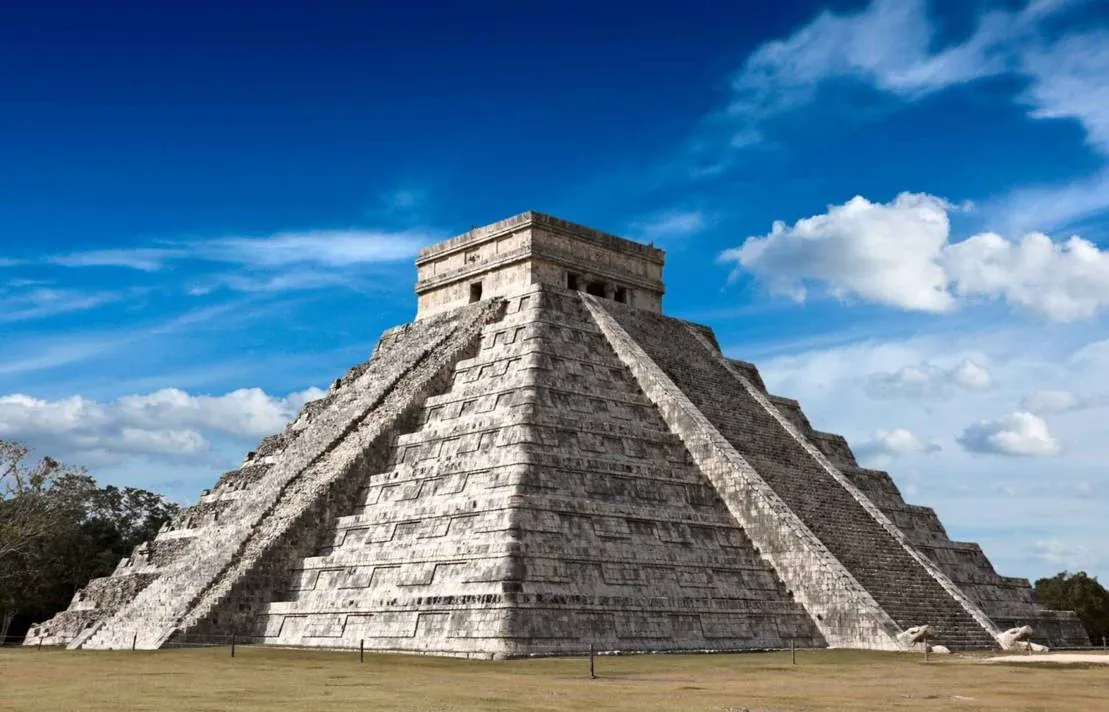
Chichen Itza tours are advertised at $49 and at $199, and both listings show the same pyramid. The gap is not mostly about the day you get. It is about what the headline number leaves out. The advertised price is rarely the price: the real total is the headline plus whatever the listing excluded, moved to a fine-print line, or left for you to pay in cash on the day. This page takes a tour price apart line by line, the formula, the entrance fee, the bands, the extras, so you can rebuild any listing's real total before you compare it with anything. Prices on this page were checked in November 2026, and every market figure carries its source. Si buscas cuánto cuesta un tour a Chichén Itzá, fíjate en el precio tour Chichén Itzá qué incluye, no solo en el número del anuncio.

Every Chichen Itza tour price, whatever the seller, is built from the same four layers. Layer one is the advertised price: the number in the listing title, the one the search results show. Layer two is the mandatory exclusions: charges you cannot avoid on the day but which sit outside the headline: above all the ruins entrance fee, and often the cenote's admission. Layer three is the charged extras: lockers, life jackets, drinks and anything else priced separately once you are already on the bus. Layer four is tips, which no listing includes and every traveller is expected to find in cash.
The real total is all four layers added together, per person. Sellers compete on layer one because layer one is what appears in search results and comparison grids; layers two and three are where a cheap headline quietly becomes an ordinary price. That is why this page, and every worked example on it, separates the columns: Advertised / Mandatory on top / Optional. Any listing you are considering can be forced into the same three columns, and a seller who will not tell you what belongs in the second column is asking you to book without knowing the price.
Find the headline, then hunt for three phrases: "entrance fee not included" (or a peso supplement named in the exclusions), the cenote's name and whether its admission is in, and an extras list: locker, life jacket, drinks. Whatever you cannot find stated, put in the "mandatory on top" column at the going rate until the seller confirms otherwise in writing.
One line dominates the gap between headline and total, and it is not the operator's charge at all: it is the state's. A foreign adult entering Chichen Itza pays 697 MXN: 105 MXN to INAH, the federal archaeology institute, plus 592 MXN Yucatán state charge (INAH fee schedule, September 2026; CULTUR, February 2026). At the gate, children aged 3–12 pay 105 MXN in total. Whether that 697 MXN sits inside your tour price or on top of it is the single biggest pricing difference between listings, worth roughly $35–$39 per adult at November 2026 exchange rates, before anything else is added.
Three consequences follow. First, a tour that "excludes admission" is not necessarily dishonest, but its headline is not comparable with an all-in price until you add the fee. Second, some listings collect the fee as a peso supplement on the day rather than at the gate, and the supplement is not always the official figure: the next section works the best-known example. Third, the fee is fixed: it does not change by season, by seller or by how early you book, so any "fee rise" urgency in a sales pitch is about the tour price, not the ticket.
The full fee system, who pays what, the state and federal split, concessions and how the ticket works at the gate, is covered on the Chichen Itza tickets and entrance fees page. Here, the fee matters for one reason only: it is the line most often missing from the number you were shown.
Take the market's best-known bargain and run the formula on it. The top-selling Chichen Itza listing on Viator, operated by SAT, advertises $49 per person (listing checked November 2026). Here is the same tour in the three columns:
| Column | What it is | Amount |
|---|---|---|
| Advertised | The headline price per person | $49 |
| Mandatory on top | Ruins supplement collected on the day, against an official entrance fee of 697 MXN | 780 MXN |
| Charged extras | Locker and life jacket at the cenote | $5 |
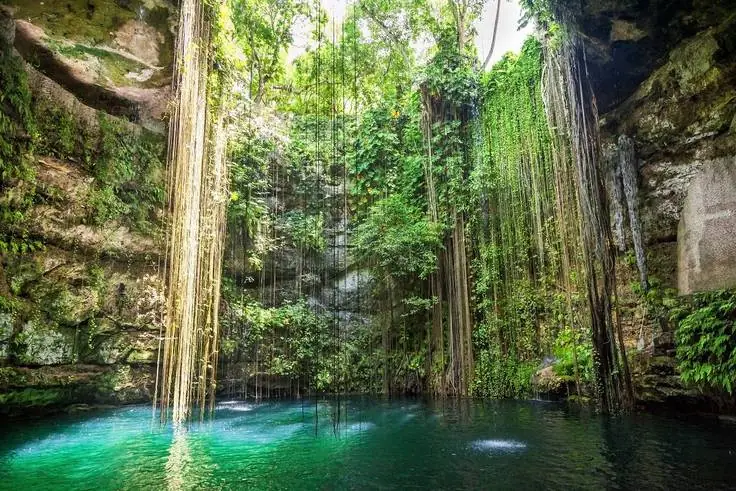
Two things in that table deserve plain statements. The supplement is 780 MXN; the official fee it stands in for is 697 MXN; the difference is 83 MXN. That is the arithmetic, stated as arithmetic: what the difference represents is the operator's business, but you are entitled to see the numbers side by side before you decide the headline was a bargain. And the cenote on this itinerary is Saamal, a real cenote, and a good swim, even though the listing's own web address names Ik Kil. The name you are sold and the name you get are different, which matters when the cenote was part of why you chose the tour.
It is not the only $49 in the market. A second live listing, chichenitza7.com's Classic tour, also headlines $49, with the entrance charged on the day at $30 per adult and $15 per child (search results, November 2026). Same headline, different second column. That is the whole lesson of this page in one pair of examples: headlines are not comparable; totals are.
With the formula in hand, the market sorts into bands. These are observed advertised ranges across operator and platform listings, checked November 2026: descriptions of what each band typically includes and typically cuts, not verdicts on any named tour. Named tours, compared and ranked, are the best Chichen Itza tours page's job; this page explains the bands themselves.
| Band | Advertised | What it typically buys, and cuts |
|---|---|---|
| Budget bases | $35–$59 | Transport and the itinerary skeleton. The entrance fee is normally outside the price, cenote extras are charged on the day, and what gets cut first is time: at the ruins, at the cenote, in Valladolid. |
| Typical shared | $90–$150 | The mainstream shared day. Some prices in this band include the 697 MXN fee and some do not: the band only means anything once you know which. |
| Classic / Plus | $109–$152 | The packaged tiers on operator sites: more of the day bundled in, commonly the fee and cenote handled, drinks more often included. |
| Deluxe / Diamante | $170–$249 | The top shared tiers: the fullest inclusion lists, premium vehicles or smaller groups claimed, the fewest on-the-day charges. |
| All-inclusive tier | ~$199 | One operator's live ladder shows the shape clearly (chichenitzafromcancun.com, November 2026): Standard $57 plus roughly $40 of fee on top, VIP $93, and an All-Inclusive tier at $199. |
Read the bands as a menu of trade-offs, not a quality ladder. What a lower band typically cuts is specific: time inside the ruins, the named cenote (a famous one swapped for a convenient one), the Valladolid stop (a real stop shrinking to a drive-by), drinks, and guide depth. A higher band buys those things back. Whether they are worth the difference is a genuine judgement call, but it should be made knowing which items your band has cut, which is exactly what the listing's inclusions list will tell you if you read it against this table. For the fuller story behind the spread, see why Chichen Itza tours cost anywhere from $59 to $170.
One warning about the top of the table: "all-inclusive" describes a tier name, not a guarantee. Even top-tier prices leave tips outside, and drinks, photos and extras vary by listing. The band tells you where to look; the fine print tells you the truth.
Three tour shapes, two party sizes, one method. Each row keeps the formula's columns separate, and each figure is the dated, named example from earlier on this page: a budget base (the $49 listing), a mid-band all-in shape, and this site's own tour. Tips are excluded from every row; budget them separately using the tipping section below.
| Tour shape | Party | Advertised | Mandatory on top | Real total |
|---|---|---|---|---|
| Budget base ($49 listing) | 2 adults | $98 | 2 × 780 MXN + $10 extras | ≈ $186–$195* |
| Budget base ($49 listing) | 2 adults + 2 children | $196 | Supplements + extras per person† | See note |
| Mid all-in (~$199 tier) | 2 adults | $398 | $0 in the tier's inclusions | $398 |
| Mid all-in (~$199 tier) | 2 adults + 2 children | Per the seller's child rate | $0 in the tier's inclusions | Per listing |
| This tour ($130 / $115) | 2 adults | $260 | $0: 697 MXN fee included | $260 |
| This tour ($130 / $115) | 2 adults + 2 children | $490 | $0: 697 MXN fee included | $490 |
* The budget-base total converts the 780 MXN supplements at the November 2026 range of roughly 18–20 MXN per dollar; the rate your seller applies moves the total, which is itself one of this page's points. † The $49 listing's child supplement and extras are charged per person on the day; confirm the child supplement in writing before booking rather than assuming the adult figure. The worked lesson is the method, and the method is: get the second column in writing. Worked examples compiled November 2026.
Notice what the table does to the comparison you started with. The $49 headline and the $130 price looked $81 apart per person. In real totals for two adults, the gap is roughly $65–$74 for the couple, and the two days are not the same day: different cenote, different time allowances, different extras. None of that makes the budget base a bad buy. It makes the headline a bad comparison.
Shared tours are priced per person; private tours are priced per group or per vehicle. Every confusing price comparison in this market starts by mixing the two. A private quote of $890 looks absurd next to a $130 shared seat, until you divide. That figure is from Maya Explorer's published guided-private range of $890–$1,890 per group, quoted here as one operator's range: at the bottom of it, a private guided day for two works out to $890 ÷ 2 = $445 per person, against $130 per person shared. The same $890 split four ways is $222.50 a head; split six ways, about $148, suddenly inside shared-tour territory, with a private day attached. Group size is the whole calculation.
Below the guided-private tier sits the vehicle-only market: a driver and a vehicle, with guiding arranged separately or hired at the gate. Published per-group evidence includes TopKlass at $319 for 1–4 passengers up to $638 for 14–20, and chichenitzaprivatetour.com at $380–$780 per group (listings checked November 2026). Between the two formats sits the small-group middle: Maya Explorer also publishes a small-group seat at $235 per person, per-person pricing, private-style numbers.
So the honest way to compare: convert everything to your party. Per-person prices multiply up; per-group prices divide down; and a private quote only means something next to the number of people it carries. How private tours are quoted and what the quote should state is covered on the private Chichen Itza tour page.
There is no single "child price" at Chichen Itza, because there is no single definition of a child. Each seller, and each attraction, draws the line somewhere different, and the differences are the lesson:
| Who is charging | Their child rule |
|---|---|
| The ruins gate | Children aged 3–12 pay 105 MXN in total, the federal portion only. |
| Cenote Ik Kil | Priced by height, not age: 150 MXN at 1.20–1.40 m tall; children under 1.20 m enter free (official cenote site). |
| Xcaret tours | 25% off for ages 5–11; under 4 free. |
| Cozumel Tours | $89 child vs $139 adult, ages 5–11. |
| chichenitza.com | Child prices by tier, $115–$185, ages 5–11. |
| This tour | $115 per child, up to age 12, the same cut-off as the ruins gate. |
The practical trap is a child who is a "child" in one column and an "adult" in another: an 11-year-old pays the child rate almost everywhere, but a tall 10-year-old pays Ik Kil's child rate by height while a short 13-year-old pays the ruins' adult fee by age. Before you book any tour with children, ask one question: what is your child cut-off, and is it by age or by height?, and get the answer in writing next to the price. On a family booking, that one line moves the total more than any discount code.

Extras divide into two kinds: the ones with settled, published prices you can budget exactly, and the ones no honest page can price for you because they vary by seller and by day. Here is the first kind, every figure sourced, checked November 2026:
| Extra | Price | Source / note |
|---|---|---|
| Ik Kil admission | 240 MXN | Official cenote site, and the ticket already includes the life jacket, locker and parking, so at Ik Kil those are not separate extras. |
| Ik Kil buffet package | 530 / 280 MXN | Adult / child, official cenote site, the bundled admission-and-buffet option. |
| Parking (going independently) | 124 MXN | At the ruins, for DIY visitors; CULTUR, February 2026. |
| Guide hired at the gate | ~1,000 / ~1,200 MXN | Per group, Spanish / English, an estimate, not a regulated tariff; agree the price before the walk starts. |
| Locker + life jacket on the $49 listing | $5 | That listing's own charge at its cenote, quoted as a listing's charge, not a market price. |
And the second kind: the ask-first list. Drinks beyond whatever the listing names, photos (cenote and site photographers work on commission), and souvenirs at the ruins' vendor rows have no settled price anyone can print for you; they cost what you let them cost. The budgeting rule is simple: if an item is not in the inclusions list and not in the table above, carry cash for it and treat anything unspent as a saving, and if a seller quotes you a peso figure for a locker or a life jacket as though it were an official tariff, you now know Ik Kil's own ticket bundles both, and can ask why theirs doesn't. If you are costing the day out yourself instead of booking a tour, the transport side of that DIY total is worked through in the guide to how to get from Cancun to Chichen Itza.
What the fare does not cover becomes cash on the day; how much cash to bring on the day turns the extras above into a per-person total.
No tour price in this market includes tips, and almost no traveller budgets for them, which makes tipping the one layer of the formula that arrives as a surprise at the end of a long day, in cash, when your pesos are running low. It is customary, not a fee: nobody will invoice you for it. But "customary" in practice means the guide and driver expect it, and the honest move is to treat it as a budget line from the start.
What travellers report budgeting, with sources, published ranges, not a tariff:
| Who | Reported range | Source |
|---|---|---|
| Guide, large-group tour | ~100 MXN per person | Happy Shuttle guidance |
| Driver, large-group tour | ~20 MXN per person | Happy Shuttle guidance |
| Guide / driver (dollar version) | $5–$10 / $2–$3 | thechichenitza.com tour-cost guide |
| Guide, private full day | 300–600 MXN | AFAR, July 2026 |
| General rule of thumb | 10–20% of the tour cost | AFAR, July 2026 |
Tip the guide and the driver separately, money handed to one does not reliably reach the other, and carry it in pesos, in small notes, kept aside from your extras money so the end of the day does not become an ATM hunt in Pisté. On a shared tour for two, the reported ranges add up to roughly 240 MXN for the couple: small next to the ticket, but exactly the kind of line this page exists to make visible before the day, not during it. For the full breakdown, who gets what, and in which currency, see how much to tip on a Chichen Itza tour.
Chichen Itza tours live in two currencies at once. The headline prices are commonly in US dollars: that is the currency the listings compete in. But the charges collected on the day, gate fees, ruins supplements, cenote extras, are typically collected in Mexican pesos, in cash. So a single booking can ask you for dollars online and pesos on the bus, and the join between the two is an exchange rate that somebody chooses.
That rate was around 18–20 MXN to the dollar in November 2026 (a hedged, single-source range, rates move, and this page will age). The spread inside that range is not trivial: a 780 MXN supplement converted at 18 costs you $43.30; at 20, $39. Multiplied across a family and a day of extras, the rate your seller applies is a real, if quiet, part of the price.
The operative advice is one question, asked before you pay: which rate do you use, and what exactly will I hand over on the day, in which currency? A seller who answers with a number has nothing to hide. If you are paying a peso charge, paying it in actual pesos, rather than in dollars converted at a rate invented at the bus door, is almost always the cheaper side of the join.
Book the same tour in three places and you can get three prices, because the price includes every hand the booking passes through. The operator runs the bus. A platform or reseller lists the operator's tour and takes a margin for the listing and the payment. A hotel desk adds another layer on top of that: the desk's commission, for the convenience of booking from the lobby. Platforms are also widely claimed to take commissions in the region of 20–30% of the listed price; treat that as an attributed industry claim rather than a published rate card, but the direction it points is confirmed by what travellers actually report being quoted.
The reported quotes, as traveller reports: one visitor was quoted $185 at an Amstar hotel desk for a tour the same traveller found at $135 online (Tripadvisor forum). Another reported a hotel-desk quote of $240 per person. A third report, from Canada, records CA$200 through Nexus (Reddit). None of these is a price list: they are what the mechanism looks like when it lands on one traveller at one desk. The mechanism itself is not a scam: the desk is selling convenience and a human to complain to. But it is a layer you can choose not to buy, by booking with the operator directly, and then doing the verification work the desk's brand name was doing for you. That work is set out as ten checks in the how to choose a Chichen Itza tour guide.
Two different moving parts hide inside this question. The official fees do not change by season: the 697 MXN entrance fee is the same in January as in September, set by INAH and the state, not by demand. The tour and transport prices do move: operators and platforms price against demand, vehicles and hotel-zone pickup routes cost what they cost in high season, and the swing shows up in the advertised layer, not the fee layer. September–October is reported as the cheapest period for tours (itzatour.com), the rainy, low-demand weeks when sellers compete hardest for the travellers who are here.
Departure city moves the price through distance and pickup logistics rather than through the ruins: the fee is identical whether you sleep in Cancun or Mérida, but the drive is not. The city pages carry each departure's own pricing context and drive times: Cancun, Tulum, Playa del Carmen, Riviera Maya and Mérida each have their own page too, so this page keeps only the principle: compare totals within one departure city, because a cheaper headline from a farther city is usually buying you a longer bus ride, not a cheaper tour.
Our own price, put through the same formula as every other price on this page. The shared tour, Chichen Itza, a swim at Cenote Ik Kil, a stop in Valladolid, is US$130 per adult and US$115 per child up to age 12. Inside that headline, printed rather than implied: the 697 MXN Chichen Itza entrance fee is included. There is no fee to pay at the gate and no ruins supplement on the day. We will not call this the cheapest tour or claim a blanket freedom from extra charges: this page exists because such claims dissolve under arithmetic. What we can do is show the accounting, which is the table and the calculator below.
The total this page keeps returning to is the one on the Chichen Itza tour itself, $130 an adult, $115 a child, fee included.
| Party | Total | Advance to reserve (30%) | Balance on the day |
|---|---|---|---|
| 2 adults | $260 | $78 | $182 |
| Family: 2 adults + 2 children | $490 | $147 | $343 |
The booking terms sit next to the price, where they belong: a 30% advance reserves the seats, taken because on-the-spot no-shows block seats that ready customers could have used, the balance is paid on the day of the tour, and cancellation is free up to 48 hours before the tour, with the advance refunded in full inside that window's safe side. Two items remain open on this tour, stated exactly as a customer hears them: the guide arrangement and lunch are confirmed in writing on WhatsApp before you pay. If either answer matters to your decision, ask before the advance, not after: that is this page's advice applied to its own tour. The full day, city by city, is on the homepage.
Your message, composed from the calculator: Hi, I would like to book the shared Chichen Itza tour from Cancun for 2 adults. Total $260, with the 697 MXN entrance fee included, please confirm the total in writing.
The whole page compressed into five questions. Ask them of any seller: the answers, in writing, rebuild the real total from the formula:
Price is only one of the things worth checking before you book: time inside the ruins, group size, the guide, pickup and operator verification matter just as much. The full framework is the how to choose a Chichen Itza tour guide: ten checks, with a copy-ready WhatsApp script.
Shared tours advertise from about $35–$59 at the budget end before mandatory extras, run roughly $90–$150 for a typical shared tour, and reach about $170–$249 at the deluxe end, with an all-inclusive tier around $199. The headline is rarely the total: the real price is the advertised price plus any excluded entrance fee, charged extras and tips. Prices checked November 2026.
Because the $49 headline is a base, not a total. The top-selling $49 listing adds a 780 MXN ruins supplement on the day, 83 MXN more than the official 697 MXN entrance fee, plus $5 for a locker and life jacket, and its cenote is Saamal, not the Ik Kil in its web address. A $130 price with the 697 MXN fee already inside is a different kind of number: a total.
Sometimes, and the difference is the single easiest price trap in this market. The 697 MXN foreign adult fee (105 MXN INAH + 592 MXN Yucatán state) is included in some tour prices and charged on top of others. Check the listing's fine print, and if it is not stated, ask in writing before you pay. On this site's tour, the fee is included in the $130 price.
It depends on which layers are missing. Two seats on a $49 base become $98 plus two 780 MXN ruins supplements plus $10 in locker and life-jacket charges, roughly $186 to $195 in total, depending on the exchange rate applied. On this site's tour, two adults pay $260 for the tour itself, with the 697 MXN entrance fee included: $78 to reserve, $182 on the day.
The ones that recur: the entrance fee if it is excluded (697 MXN per foreign adult), cenote admission if it is excluded (Ik Kil's own ticket is 240 MXN, life jacket and locker included), drinks, photos and souvenirs, and tips for the guide and driver. Ask which of these your price covers before you pay: the extras list on this page separates the settled figures from the ask-first ones.
It depends on which cut-off the seller uses. Operators variously discount ages 5–11, charge a child price up to age 12, or, at Ik Kil, price by height: 150 MXN at 1.20–1.40 m, free under 1.20 m. At the ruins gate, children aged 3–12 pay 105 MXN. On this site's tour, children pay $115 each up to age 12.
Shared tours are priced per person; private tours are priced per group or per vehicle. That is why private quotes look large next to shared prices: a guided private day for two at $890 works out to $445 per person, while vehicle-only options start lower: TopKlass publishes $319 for 1–4 passengers. Which is cheaper depends on your party size.
Tours are commonly advertised in US dollars, while gate charges and on-the-day supplements are collected in Mexican pesos, in cash. The exchange rate was around 18–20 MXN to the dollar in November 2026. Ask which rate your seller applies to any peso charge: the rate used, not the currency, is where the difference hides.
Travellers report budgeting around 100 MXN per person for a large-group guide and about 20 MXN per person for the driver (Happy Shuttle); another published range is $5–$10 for the guide and $2–$3 for the driver. A private full-day guide is commonly tipped 300–600 MXN, and 10–20% of the tour cost is a general guide rule (AFAR). Tipping is customary, not a fee.
The official fees do not change by season: the 697 MXN entrance fee is the same all year. Tour and transport prices do move with demand, and September–October is reported as the cheapest period for tours. Booking ahead in high season is mainly about availability, not about beating a fee rise.
Because each hand the booking passes through takes a margin. Hotel desks and resellers sit between you and the operator: one traveller reported being quoted $185 at a hotel desk for a tour sold online at $135, and another was quoted $240 per person. Buying from the operator directly removes at least one layer, then verify the operator, as the How to Choose guide sets out.
It should not. A written confirmation should state the total you will pay; if it does not, ask before paying anything. On this site's tour, the total in your written confirmation is the price: a 30% advance to reserve, the balance paid on the day, and free cancellation up to 48 hours before the tour.
Sources: INAH fee schedule (September 2026) and CULTUR (February 2026) for the entrance fee; Cenote Ik Kil's official site (admission, buffet package, child-by-height pricing); Viator/SAT and operator listings including chichenitza7.com, chichenitzafromcancun.com, Maya Explorer, TopKlass and chichenitzaprivatetour.com (advertised prices, checked November 2026); Happy Shuttle and AFAR (tipping ranges); Tripadvisor forum and Reddit traveller reports (hotel-desk quotes). Market figures checked November 2026.
Send us your date and group size and the reply states the whole price, the total, the 30% advance, the balance on the day, in the same WhatsApp thread, before you pay anything. No layer added later.
Message us on WhatsApp: +1 970 780 8327
Message us on WhatsApp