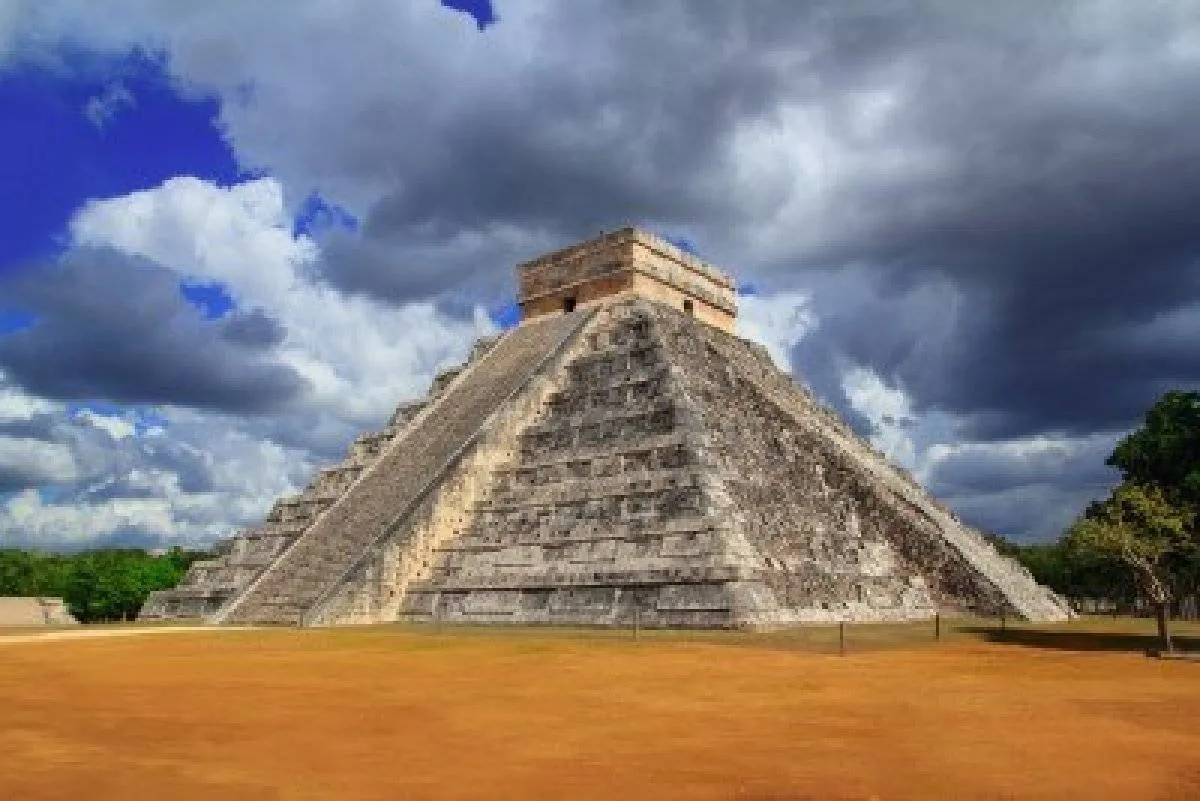
El Castillo: The Classic Frame
Start where the site itself puts you: the great plaza. El Castillo stands over open ground, and the classic frontal, pyramid centred, staircase facing you, is shot from that public plaza. That is settled geography, and it is why this photograph works for every visitor who reaches the plaza, whatever the light is doing.
Photographer reporting adds the refinements. The northwest corner of the pyramid is the reported spot for straight-on shots. The benches in front of the pyramid are a place to sit and wait for a gap in the flow of people before you shoot. The side and south face are reported as the less-crowded angle when the front is busy. And for detail, go low: low-angle shots and close frames of the serpent heads at the staircase base and the staircase itself give you the second photograph most visitors miss. What each face and staircase means is covered on the El Castillo guide.
The Great Ball Court: Photographing Scale
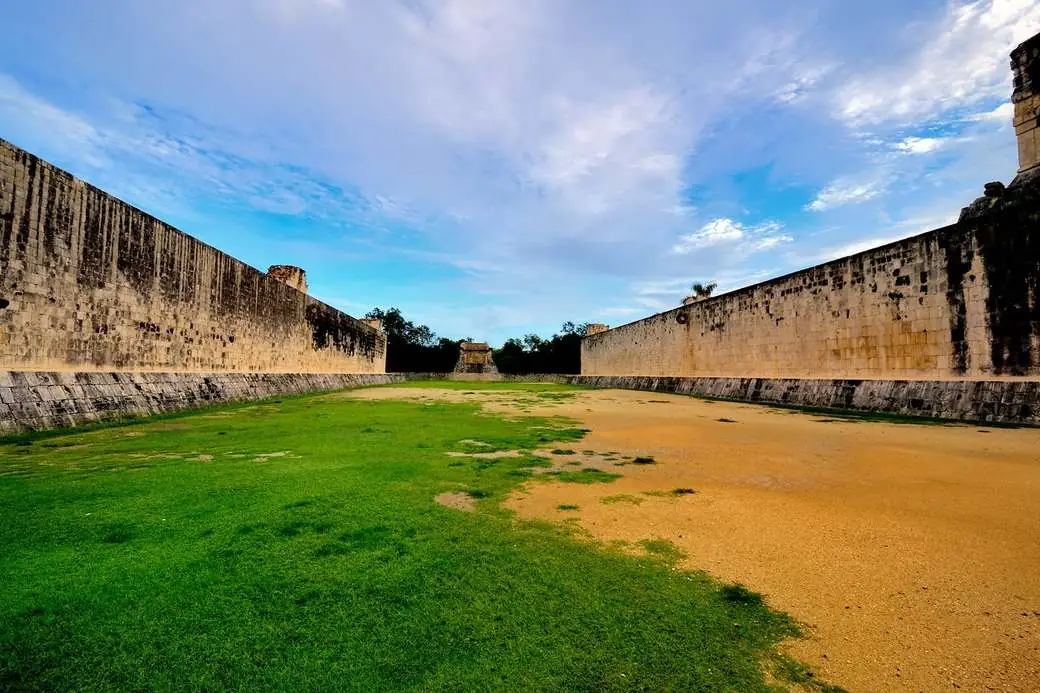
The ball court's subject is scale, and you photograph it from the alley floor: two long walls running away from you, with the stone rings set high on the walls above. From the floor, the walls do the work: stand back, frame along the court's length, and let the rings sit small and high in the picture, exactly as they sit in the building.
Reporting adds the view from the north end of the court, looking down its length. And photographer reporting offers the peak-hours move: when the wide shots are full of people, drop to the carved lower walls and shoot midday detail close-ups of the carvings instead, the detail is there all day, even when the wide frame is not. The court's story and rules of the game are on the Great Ball Court guide.
Warriors and the Thousand Columns: Lines and Repetition
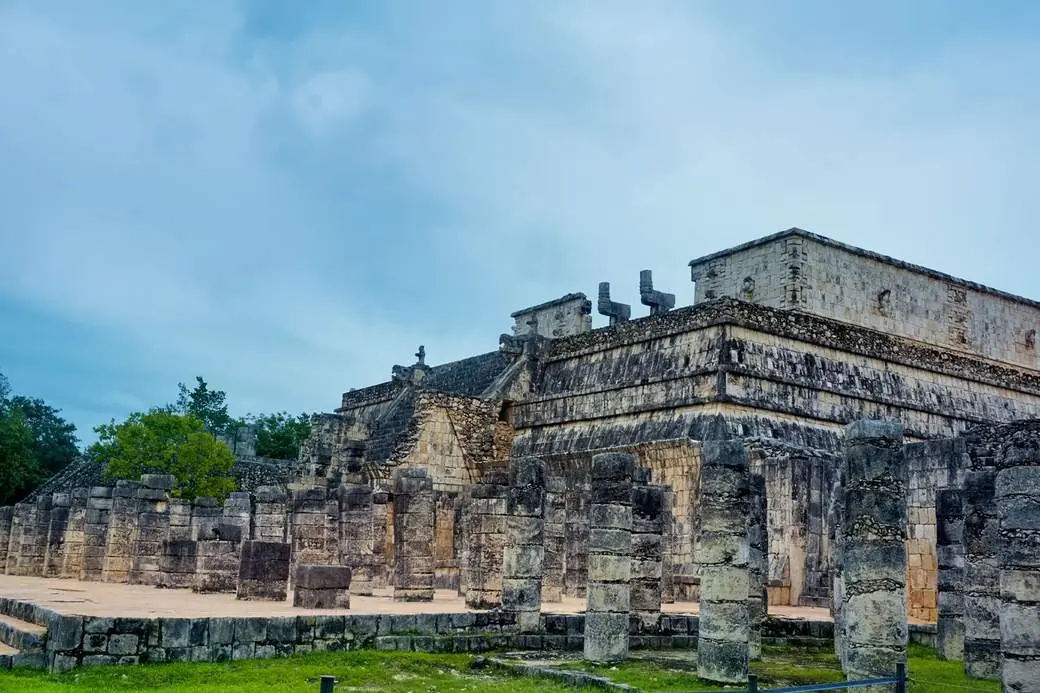
The Temple of the Warriors photographs differently from the pyramid: its subject is repetition. From the front viewing area, the colonnades give you long lines of columns receding in rows: frame along a row, not across it, and the repetition becomes the picture. The temple above the columns and the colonnade in front of it are the two layers of the same shot.
One honesty line, because photo advice elsewhere blurs it: this page does not claim you can walk among all the columns. Visitor access to the colonnades is not established in the sources read, so the shot is planned from the front viewing area, which is where the lines-and-repetition frame comes from anyway. The building's history is on the Temple of the Warriors guide.
The Sacred Cenote from the Rim
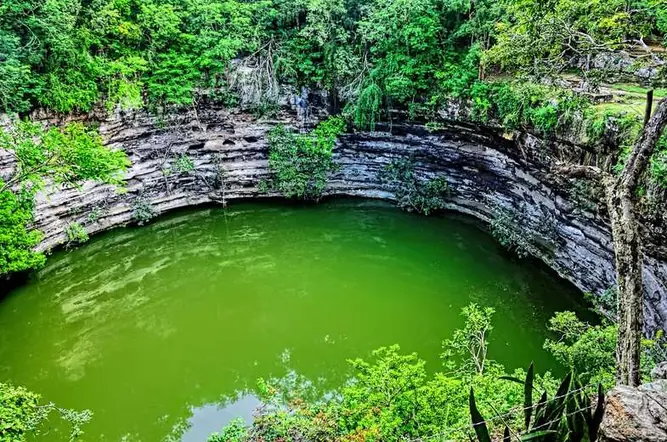
The Sacred Cenote is photographed from the rim, looking down into the green water, a viewing platform at the rim is reported by travellers, and the rim viewpoint is the frame: steep limestone walls, jungle around the edge, the water far below. Photograph it as a landscape, wide, with the rim vegetation in the foreground to give the drop its scale.
Two boundaries are settled, and they shape the shot. There is no descending to the water and no swimming here: the cenote is a look-and-learn stop, and the swimming on this tour is at Cenote Ik Kil, later in the day. What the cenote was, and what was found in it, is covered on the Sacred Cenote guide.
The Southern Group: Caracol, Las Monjas, Osario
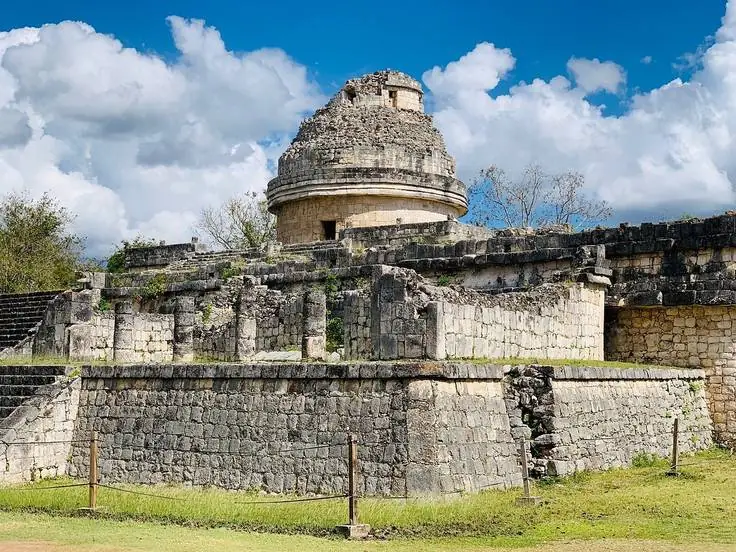
South of the plaza group, the photographs change character: smaller buildings, carved stone, and, per photographer reporting, a part of the site that stays quieter for longer into the day. El Caracol, the round observatory tower, is framed from the public paths against the structures in its foreground. Las Monjas is a detail subject: carved façades shot from the open visitor areas, where the stonework fills the frame. The Osario is photographed from the permitted paths like everything else in the group.
Everything here is from open areas and paths: no viewpoint in this section sits behind a building, off a path or inside a restricted area, and none is offered on this page. That restraint is what makes the southern group the page's second-half strategy: when the plaza is at its busiest, the south is where the quieter frames are reported to be. El Caracol's astronomy is covered on the El Caracol guide.
Light Across the Day
The light's character across the day is advice-grade, and it is simple. Morning brings lower sun and longer shadows across the plaza. Midday brings harsh overhead light and deep shadow, hard on portraits, but it gives the carved stone its strongest texture, which is why the detail shots belong to the middle of the day. Late afternoon lowers the sun again, and photographer reporting puts the strongest contrast in the last hour before the 5 PM close.
The north-face disagreement, printed plainly: sources disagree three ways about when El Castillo's north face is best lit: late afternoon, say some; early morning, say others; mid-to-late morning, say a third group. Nothing read for this page settles between them, so this page prints the disagreement instead of a timing.
The practical consequence: the pyramid photographs from the plaza in any of the day's lights. Do not plan your day around a face-light claim nobody can settle. Plan it around the crowd pattern in the next section, which is settled.
One seasonal line: on the equinoxes, the light on El Castillo's staircase becomes the famous serpent effect, a seasonal, INAH-documented subject covered on the Equinox guide. It is never a promise for any tour date: this tour's on-site hours are unconfirmed, and no date is sold here on an equinox photograph.
Photos Without People: The Honest Strategy
There is no secret hour when the site stands empty, and this page will not invent one. What exists is a settled crowd pattern, and it is the timing spine of every photograph on this page: 8–9 AM is the quietest stretch; the crowds build in a wave around 10:00–10:30; 11 AM–2 PM is the busiest; after about 3 PM the site thins again. The quiet windows are relative opportunities, not empty-site promises.
The honest line for tour guests: this tour's arrival and departure times are not published, so whether you are on site in a quiet window is confirmed on WhatsApp, not assumed. No photograph on this page is guaranteed to anyone: the strategy below is how you make the most of whichever window you actually get.
- Wait for gaps. Stand in position, frame composed, and let groups pass, the flow at the big viewpoints moves in pulses, and the gap comes.
- Frame tighter, or go wide and close. A tighter crop cuts the crowd out; stepping close with a wide frame does the same from the other direction.
- Shoot details at peak hours. Carvings, serpent heads and the ball court's lower walls do not need an empty site: save them for 11–2.
- Use people for scale. A figure at the base of El Castillo or in the ball court alley is what makes the size readable. Sometimes the person is the photograph.
- Save the wide plaza shots for the quieter windows, and the southern group for the second half of the visit, where reporting says it stays quieter for longer.
The Photo Rules in One Block
Everything a photographer needs at the gate, in one place: settled where it is settled, and printed as a conflict where it is one. The full rules depth lives on the Site Rules page; the practical inside-the-site companion to this page is the Inside-Site Practical Guide.
- Personal photography needs no INAH authorisation, subject to the site's current fee. The reported amounts conflict at 45–63 MXN: never one figure, and never "free."
- Tripods are authorisation territory. The circulating claims: banned outright, a small permit fee, written approval, conflict, and none is settled. Confirm before you travel with one.
- Professional filming needs INAH authorisation. That requirement exists and is settled, a commercial shoot is a different matter from holiday photographs.
- Drones are prohibited. Settled, with no permit softening.
- No climbing anywhere for a shot. Not on a pyramid, not on a platform, not for a better angle. Settled.
- Photographing people: general etiquette only: ask first, especially for a close portrait. No site rule is invented here.
Ik Kil: The Rim Shot and the Water
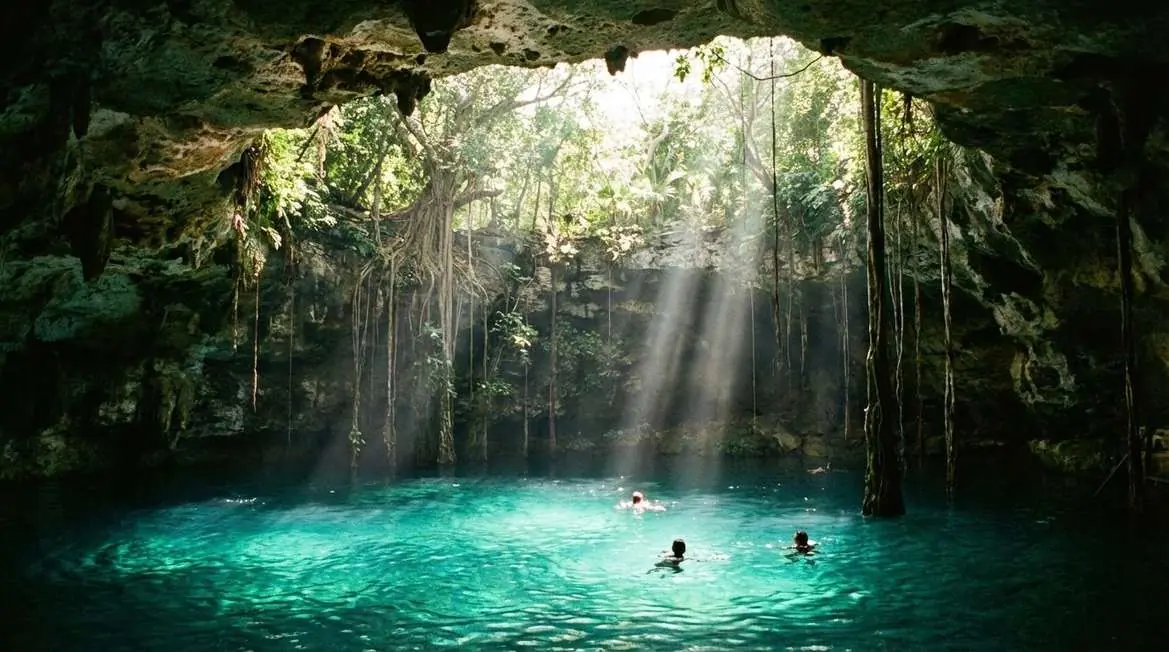
Ik Kil's classic frame is geography again: an open circular mouth roughly 60 m across, with the water about 26 m below the rim. From the rim looking down, the whole cenote fits in one frame: rock walls, hanging vegetation, swimmers small on the blue-green water below. Take the rim shot before you go down to swim, while you are at rim level anyway.
What the venue actually publishes: nothing. The venue's own site, cenoteikkil.com, states no photography, camera, tripod or drone rule on its homepage or its Cenote page, checked 9 November 2026. That is reported here as a dated observation, and it is never permission: from the water level, ask the staff on the day what is allowed, and never assume a phone or camera in the water is either permitted or banned: the venue simply does not say.
The venue rules that are settled stand as everywhere on this site: a life jacket is mandatory, there is no diving, and there is no lifeguard. The swim itself is included on this tour; the visiting depth is on the Ik Kil guide.
Valladolid in Passing
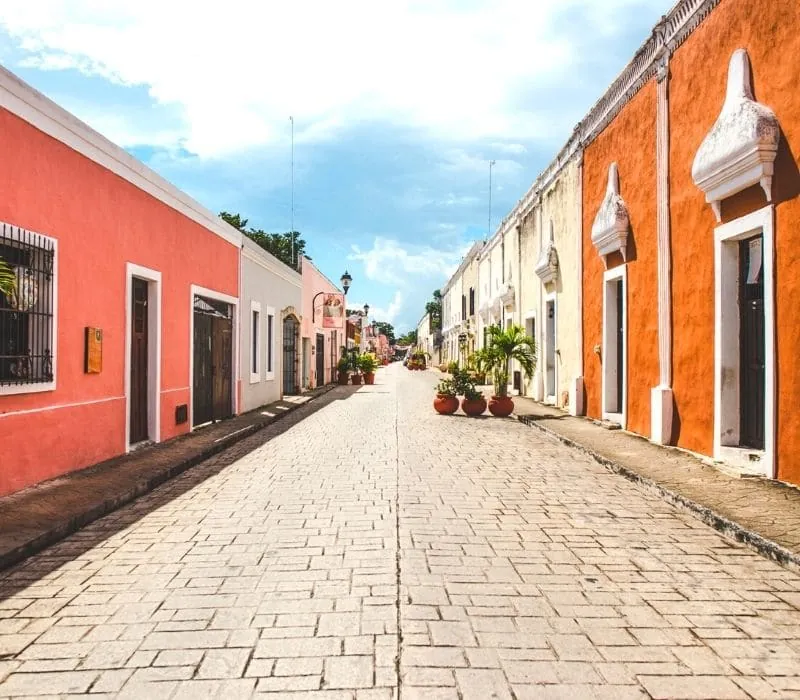
The day's last photographs are in Valladolid, and they are a passage, not a section: the town plaza and the convent exteriors are the photo layer of the stop: colonial façades and the plaza's everyday life, shot from the street as you pass. The town itself, its sights and how a short stop is best spent, belongs to the Valladolid guide.
Phone or Camera?
Phone-first, and that is advice this page stands behind: the subjects at Chichen Itza are wide and bright, and a phone covers the pyramid, portraits and details without help. Use wide or ultra-wide framing to fit El Castillo in from the plaza, portrait orientation when you want its height, and zoom for detail that sits far off: the ball court rings, carvings high on a wall. No camera or lens is required for anything on this page, and none is sold to you here.
The real risks are not optical. Battery and heat are what end a photo day: a phone shooting in full Yucatan sun drains fast and overheats faster, so carry a power bank and keep the phone shaded between shots; the Night-Before Checklist covers the charging side. At Ik Kil, protect the phone from the water, whatever the staff's answer on cameras turns out to be.
And the one "video moment" that is actually audio: clap once at the base of El Castillo and the pyramid answers with an echo, measured acoustics, recorded as sound, and a better souvenir than another wide shot. It is presented here as the physics it is, never as proof of intentional design.
What to Ask Before You Book
This tour's photographic shape is not published: no photo stops, no per-monument time, no on-site arrival or departure is stated anywhere on this site, and this page does not fill those gaps in. What it can do is hand you the exact questions, to ask on WhatsApp before you book, so the answers arrive in writing:
- Which monuments does the route normally reach: the southern group and the Sacred Cenote, or the plaza area only?
- How long do we get at El Castillo, and on site overall?
- Does the visit overlap one of the quieter windows, early morning, or after about 3 PM?
- Does the guide take guest photos?
- At Ik Kil, is there time for the rim shot before the swim?
- At Valladolid, is there time for the plaza and convent exteriors?
The Tour
This page is written for visitors arriving on the shared Chichen Itza tour sold on this site: Chichen Itza, a swim at Cenote Ik Kil and a stop in Valladolid, in a full day of 10–14 hours with hotel pickup from your own point in Cancun, Tulum, Playa del Carmen, the Riviera Maya or Merida, your exact pickup time confirmed on WhatsApp the evening before. The price is $130 per adult and $115 per child up to age 12, with the 697 MXN entrance fee included; you reserve with a 30% advance, the balance is paid on the day of the tour, and cancellation is free up to 48 hours before. It is a young operation with a short record, stated plainly, as everywhere on this site.
Price your party here, then check your date. City pages: Cancun · Tulum · Playa del Carmen · Riviera Maya · Merida.
The 697 MXN Chichen Itza entrance fee is included in these prices: nothing more to pay at the gate. Free cancellation up to 48 hours before the tour.